
Bayer donates €875,000 worth of seeds to IOM to fight global hunger
Bayer has announced the delivery of €875,000 worth of high-quality vegetable and corn seeds to ...
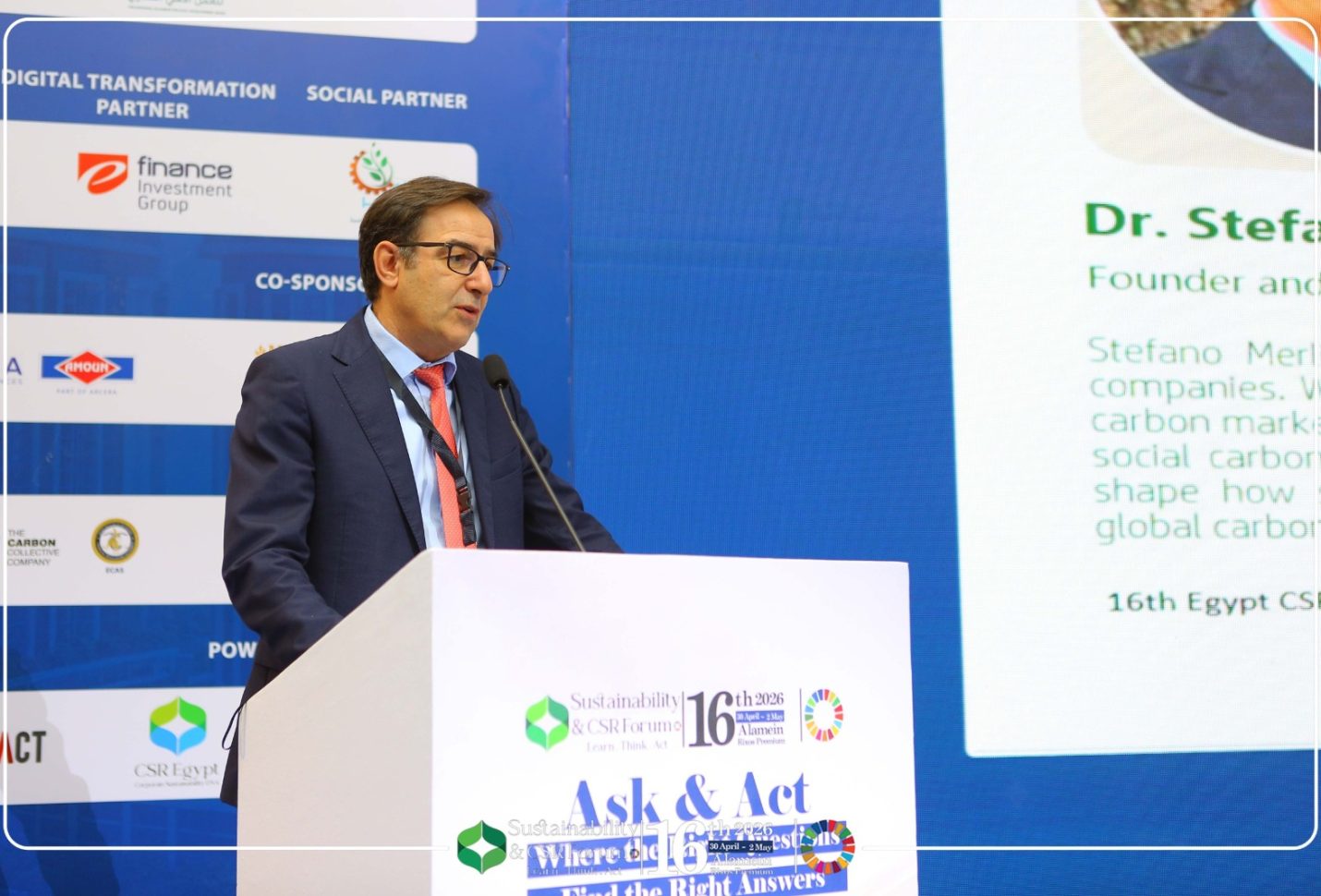
Dr. Stefano Merlin, CEO of Sustainable Carbon Group, said supply chain emissions exceed direct operational emissions by an average of 11 times, warning that decarbonizing value chains is now critical for maintaining competitiveness and securing access to global markets.
He made the remarks during the 16th annual Corporate Social Responsibility and Sustainable Development Conference (16th CSR Egypt and Sustainability Conference) under the theme of “The Right Place to Ask the Right Questions… Ask and Act”.
Merlin said the company has more than 25 years of experience delivering integrated climate solutions, having developed over 150 carbon projects and managed more than 400 million tons of CO₂ emissions across project lifecycles of up to 40 years.
He added that the company has supported more than 130 firms in their transition toward carbon neutrality.
Merlin noted that supply chains represent the largest source of corporate emissions, making them significantly more complex to address—particularly Scope 3 emissions linked to raw materials, energy, and logistics.
The Sustainable Carbon Group CEO pointed to global frameworks such as the Paris Agreement and mechanisms like the EU’s Carbon Border Adjustment Mechanism (CBAM), along with sustainability disclosure requirements, as key forces pushing companies to cut emissions across their entire value chains.
Merlin said achieving net-zero emissions requires a comprehensive approach, including mapping supply chains, identifying high-impact emission sources, and working closely with key suppliers to improve environmental performance.
He added that companies must also build robust systems for measuring and tracking emissions.
He highlighted that both nature-based and technology-driven solutions are central to this transition, including reforestation projects, soil carbon management, and shifting to renewable energy sources.
Merlin concluded that investing in voluntary carbon markets and developing emissions reduction projects offers companies a pathway to enhance competitiveness, meet regulatory requirements, and deliver measurable, sustainable climate impact.
Bayer has announced the delivery of €875,000 worth of high-quality vegetable and corn seeds to ...
Amazon is partnering with the District Department of Transportation (DDOT) to pilot e-cargo bike deliveries ...
Dr. Stefano Merlin, CEO of Sustainable Carbon Group, said supply chain emissions exceed direct operational ...
Leave a comment