Hillebrand Gori offers 85% freight emissions cuts with GoGreen Plus
Hillebrand Gori, a DHL company and beverage logistics provider, has launched two transport decarbonization solutions, ...
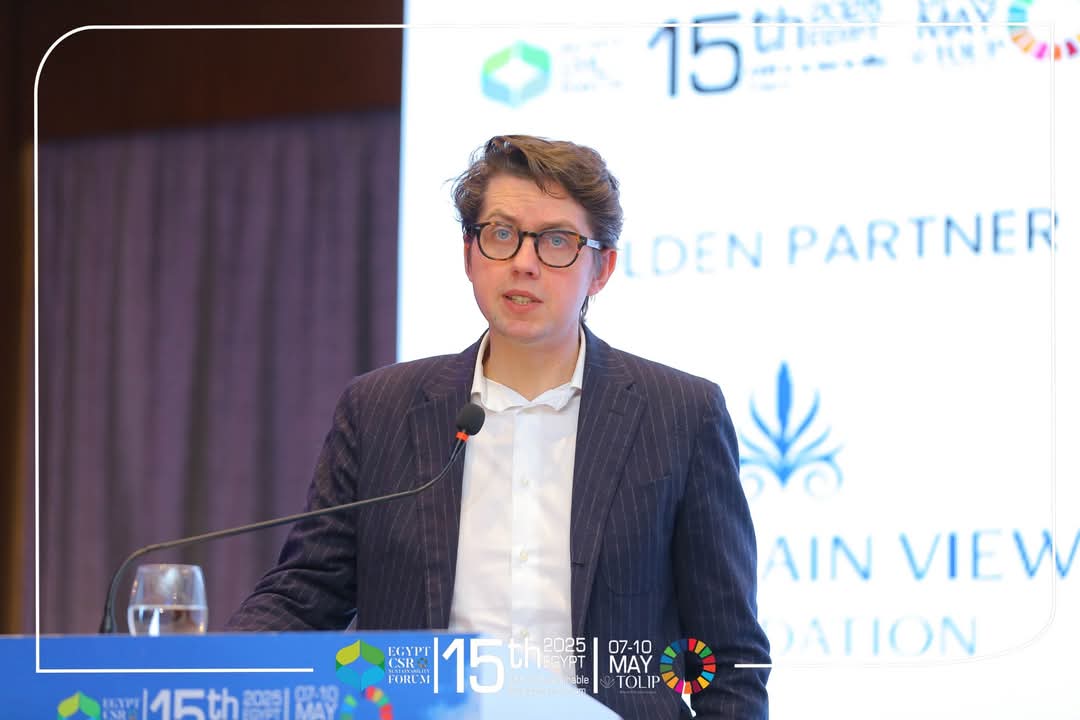
George Riddell, Trade Policy and CBAM Consultant, said requests for the EU Carbon Border Adjustment Mechanism (CBAM) will increase as of 2026 as the EU will apply more tariffs on carbon-intensive imported products.
He made the remarks during an experts’session at the 15th Egypt CSR and Sustainable Development Forum (15th Egypt CSR Forum) under the theme of “CBAM’s role in unlocking new markets, and the economic impact it will have on Egypt and MENA.
He pointed out that there are CBAM reports, and every ship going to the European Union must be covered by a CBAM report. This is part of the CBAM declaration, which examines what the product is, its price, and the amount of emissions contained within the product.
It is worth noting that the CBAM is expected to be fully in place as of 2026, but initially it is only apply to a certain number of products with a high risk of carbon leakage such as iron, steel, cement,fertilizers, aluminum, hydrogen, and electricity.
As of 1 January 2026, only registered declarants will be allowed to import CBAM goods. The customs authorities of the EU member states are obliged to monitor the movement of goods and to deny the import of CBAM goods by non-registered declarants.
With the start of certificate trading from 1 January 2026, importers are obliged to purchase sufficient emission allowances for imported embedded emissions during the year.
Within the framework of an annual CBAM declaration, the amount of imported embedded emissions will be compared with the acquired emission allowances. If too few certificates have been acquired, financial sanctions may be imposed.
Hillebrand Gori, a DHL company and beverage logistics provider, has launched two transport decarbonization solutions, ...
The Institute of Sustainability and Environmental Professionals (ISEP) has opened applications for two new professional ...
Around 60% of global investors expect to increase allocations to investments that actively combat climate ...

Leave a comment