
Meta backs MacroCycle plant targeting 5,000 tons of recycled plastic, 80% lower emissions
Meta has signed a three-year deal with US plastics recycling startup MacroCycle to support development ...
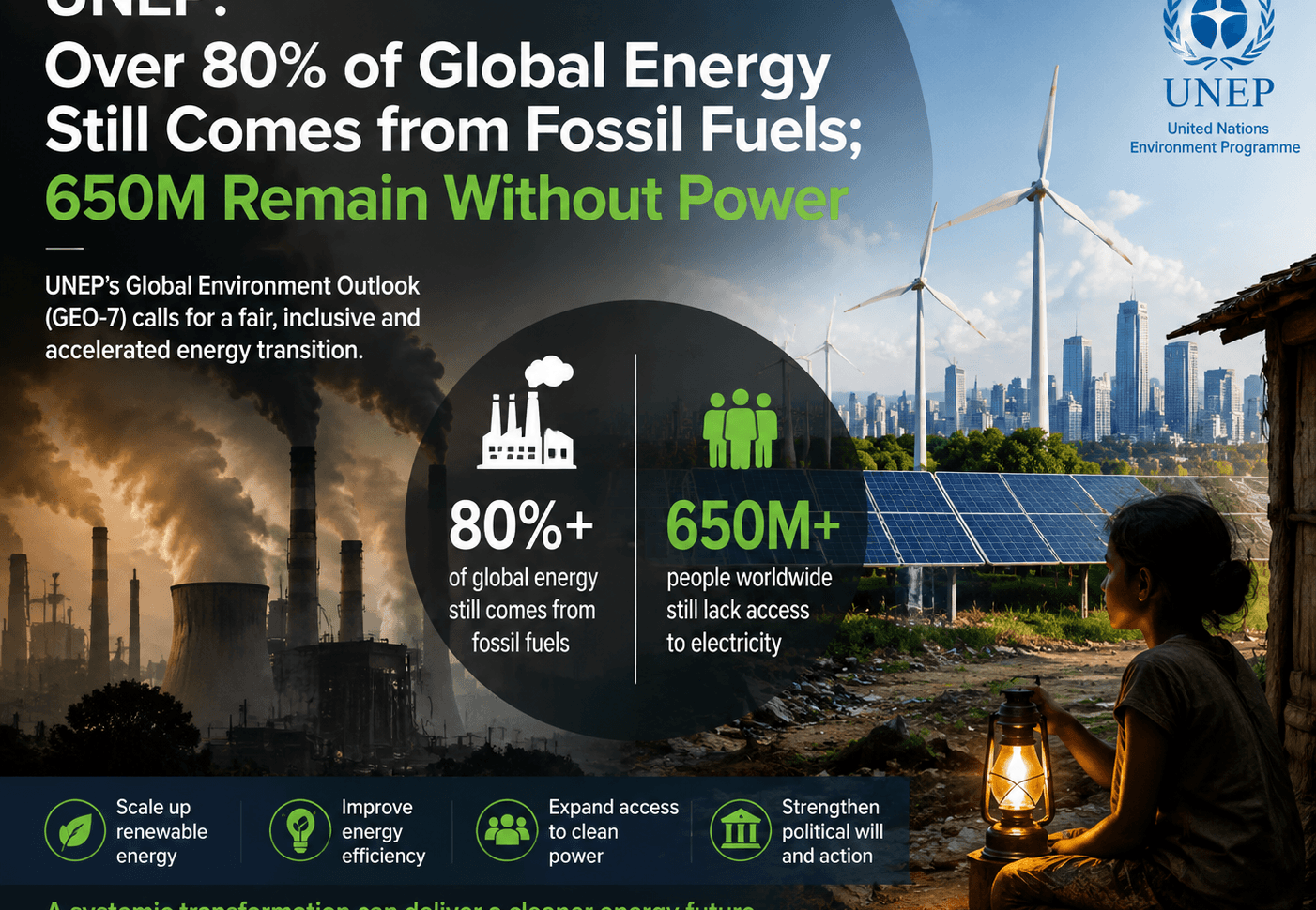
More than 80% of the world’s energy still comes from fossil fuels while over 650 million people remain without access to electricity, underscoring the twin challenges of decarbonizing the global energy system and expanding energy access, according to the United Nations Environment Program (UNEP).
In the seventh edition of its Global Environment Outlook (GEO-7), UNEP said transforming the global energy system will require a fundamental shift in how energy is produced, distributed and consumed—accelerating renewable energy deployment while ensuring the transition is fair, resilient and inclusive.
Debora Ley, a climate change scientist, renewable energy engineer and coordinating lead author of GEO-7, said the report identifies five key challenges facing today’s energy system:
“More than 80% of the world’s energy comes from the combustion of fossil fuels, which is the primary cause of the ever-deepening climate crisis,” Ley said.
While renewable energy offers a pathway away from fossil fuels, Ley warned that the transition must avoid creating new environmental and social challenges.
The rapid deployment of solar, wind and battery technologies is increasing demand for minerals such as lithium, which is often found in sensitive ecosystems, including salt flats and high-altitude wetlands.
Without strong environmental and social safeguards, mining activities could harm ecosystems and affect Indigenous Peoples and local communities, she said.
“You don’t want to just swap the damage done by fossil fuels for the damage done by mining,” Ley said. “Do it with caution, and do it ethically.”
Accelerating the energy transition will require significantly higher investment in renewable energy, Ley said, alongside redirecting fossil fuel subsidies toward cleaner and more affordable alternatives.
Global fossil fuel subsidies reached $7 trillion in 2022, and reallocating those resources could help expand renewable energy while improving energy access.
“Solar plants, wind farms and the like are also often the cheapest way to generate electricity,” Ley said.
She also called for faster electrification of sectors such as transport and wider adoption of alternative fuels, including green hydrogen, in industries that are difficult to electrify.
Beyond replacing fossil fuels, reducing overall energy demand will be essential to cutting greenhouse gas emissions, Ley said.
She highlighted improving building efficiency through better insulation, heat pumps and passive cooling techniques, while promoting more compact cities that reduce transport demand.
Behavioral changes—including walking or cycling for short trips and using electric vehicles for longer journeys—can also help reduce emissions, she added.
Expanding access to electricity must remain central to the clean energy transition, Ley said.
She called for extending electricity grids, deploying more off-grid solar systems, investing in community-scale renewable energy projects and expanding concessional financing for clean energy in underserved regions.
The transition should also accelerate the adoption of clean cooking technologies to reduce deforestation and improve public health in communities that still rely on firewood.
Although the world is likely to overshoot the Paris Agreement’s 1.5°C warming target, Ley said the technologies needed to limit global warming are already available.
“We have the solutions we need to limit the overshoot—and bring temperatures back down again,” she said.
However, she argued that progress ultimately depends on stronger political commitment.
“We need political will” to overcome entrenched interests slowing the transition, Ley said, adding that coordinated action across energy, food, waste and environmental systems can deliver a cleaner, more equitable and resilient future.
Meta has signed a three-year deal with US plastics recycling startup MacroCycle to support development ...
Catalyst Mobility, formerly CALSTART, and Smart Freight Center announced that a coalition of major cargo-owning ...
The REEFS Business Incubator, Egypt’s first business incubator dedicated to startups and SMEs working to ...

Leave a comment