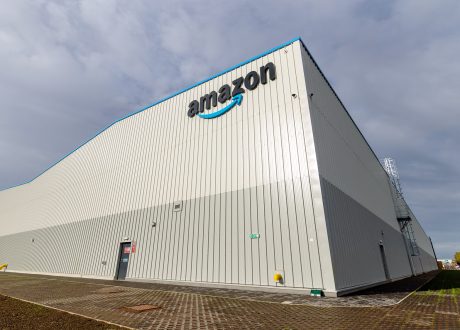
Amazon opens £40 mln low-carbon delivery station in UK
Amazon has opened a £40 million delivery station in Stockton-on-Tees, UK, designed to cut construction-related ...
International public adaptation finance from developed to developing countries reached $28.2 billion-$31.7 billion in 2024, up around $1 billion from the previous yea9r. However, even tripling these flows by 2035, as envisaged under the COP30 Global Mutirão decision, would cover only 20% to 29% of estimated needs.
The report, titled Adaptation Gap Report: Ready? Not, warns that adaptation efforts remain underfunded, implementation faces institutional barriers, and climate-related losses and damages continue to mount as global warming is set to exceed 1.5°C.
Adaptation finance falls short:
UNEP estimates that developing countries will require around $305 billion annually by 2035, based on assessments of nationally determined contributions (NDCs), national adaptation plans (NAPs), and model-based estimates. The figure largely excludes the private sector’s own adaptation needs, which could nearly double the total.
Under the COP30 commitment to at least triple adaptation finance by 2035, international public flows could reach $85 billion-$120 billion annually, depending on the baseline used. However, after adjusting for inflation, this would cover just 20% to 29% of developing countries’ needs.
For least developed countries (LDCs) and small island developing states (SIDS), tripling finance could cover 49% to 83% of their estimated requirements.
“The world is not ready to adapt to current climactic conditions, never mind what overshoot of 1.5°C will bring,” said Inger Andersen, Executive Director of UNEP.
She called on countries to step up efforts at COP31 in Türkiye and beyond to achieve the COP30 aspiration of tripling adaptation finance by 2035, stressing that even higher funding would be needed to protect lives and economies and prevent losses and damages.
Funding trends, financing gaps
Despite remaining below the required growth trajectory, international adaptation finance has recorded some progress. UNEP said the Glasgow Climate Pact target of doubling finance from 2019 levels to $40 billion by 2025 could still be achieved, partly due to an expected increase in multilateral development bank financing in 2025.
However, reaching the target will also depend on whether bilateral development assistance is affected by declining official development assistance.
Financing between developing countries has also increased, with contributions through multilateral development banks and direct South-South cooperation rising from $3.8 billion in 2019 to $9.6 billion in 2024.
Private-sector financing is growing as well, but largely addresses companies’ own adaptation needs or is funded by developing countries themselves. UNEP estimates that it could reduce the financing gap for more public-oriented adaptation measures by only 15% to 20%.
Institutional barriers, mounting losses
The report stresses that increasing finance alone will not be sufficient to accelerate adaptation, highlighting the need to strengthen institutions and improve the implementation of national priorities.
Governments are taking steps through climate change framework laws, policy-learning platforms, improved coordination across sectors and levels of government, and dedicated mechanisms to mobilize and manage climate finance.
Meanwhile, climate-related losses and damages continue to mount, with available financing falling short of identified needs and complex procedures and limited institutional capacity restricting access to support.
The first funding round of the Fund for Responding to Loss and Damage received requests totaling $2.8 billion, compared with an initial funding envelope of $342 million, highlighting the scale of unmet demand.
UNEP called for stronger assessment capabilities, predictable financial and technical support, simpler access procedures, and meaningful participation by affected communities in designing responses to climate-related losses and damages.
Amazon has opened a £40 million delivery station in Stockton-on-Tees, UK, designed to cut construction-related ...
Developing countries will need around $305 billion annually by 2035 to adapt to worsening climate ...
The European Bank for Reconstruction and Development (EBRD) is investing $100 million in Banque du ...

Leave a comment