
Meta backs MacroCycle plant targeting 5,000 tons of recycled plastic, 80% lower emissions
Meta has signed a three-year deal with US plastics recycling startup MacroCycle to support development ...
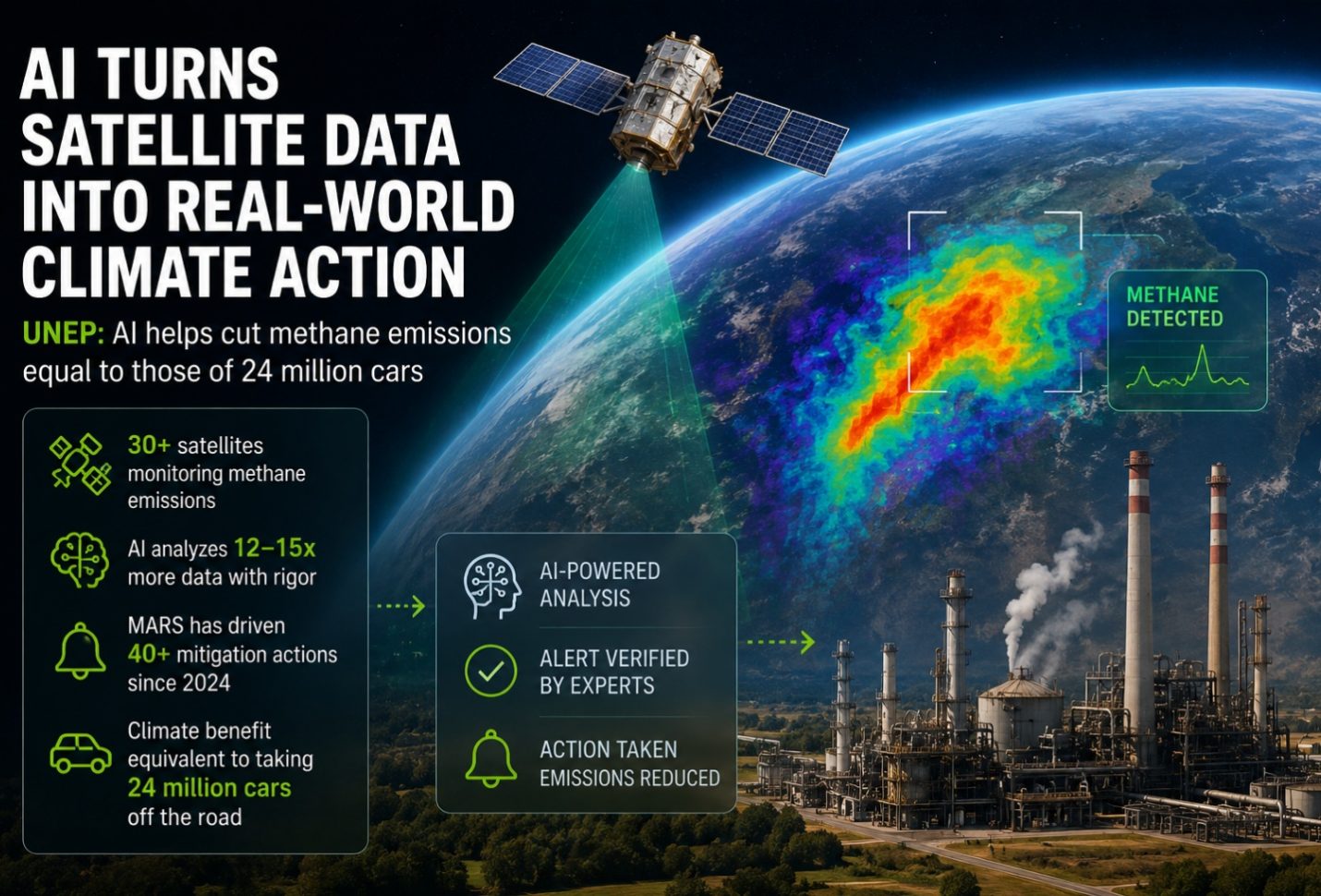
The United Nations Environment Program (UNEP) is using AI to turn satellite data into faster methane cuts, with the resulting mitigation efforts delivering climate benefits equivalent to taking 24 million gasoline-powered cars off the road.
UNEP’s International Methane Emissions Observatory (IMEO) is using AI through its Methane Alert and Response System (MARS) to detect major methane emissions and rapidly alert governments and companies, enabling faster action to curb leaks.
Since becoming fully operational in 2024, MARS has supported more than 40 methane mitigation actions worldwide.
With more than 30 satellites generating vast amounts of methane data, processing the information manually has become increasingly challenging. AI has significantly improved that process, allowing IMEO analysts to review 12 to 15 times more data while maintaining scientific accuracy.
Since 2023, MARS has analyzed more than 1.3 million satellite observations. AI identified 80–85% of confirmed methane emissions before expert review, helping mitigate sources estimated to have released 1.2 million tonnes of methane.
While AI speeds up detection, every methane alert is independently reviewed and verified by IMEO analysts before notifications are issued, ensuring scientific rigor remains at the center of the process.
UNEP also designed the AI models to be lightweight and energy-efficient, allowing them to scale methane monitoring without adding a significant environmental footprint.
Originally focused on the oil and gas sector, MARS is now expanding to monitor methane emissions from coal and waste, broadening its role in helping countries and companies meet their climate commitments, including those under the Global Methane Pledge.
UNEP is also making key datasets and AI code openly available to support researchers, governments, and organizations seeking to strengthen methane monitoring efforts.
As satellite missions continue to generate larger volumes of environmental data, the challenge is no longer detecting methane emissions but responding to them. UNEP says its AI-powered approach demonstrates how combining artificial intelligence with scientific expertise can accelerate emissions reductions, support faster decision-making, and provide a scalable model for addressing broader environmental challenges.
Meta has signed a three-year deal with US plastics recycling startup MacroCycle to support development ...
Catalyst Mobility, formerly CALSTART, and Smart Freight Center announced that a coalition of major cargo-owning ...
The REEFS Business Incubator, Egypt’s first business incubator dedicated to startups and SMEs working to ...

Leave a comment