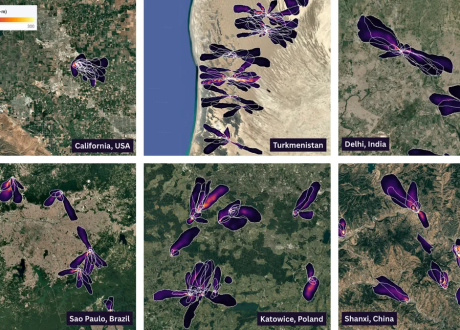
Google, NASA AI model detects 23,000 additional methane plumes globally
Google and NASA’s Jet Propulsion Laboratory (JPL) have introduced an AI model that can track ...
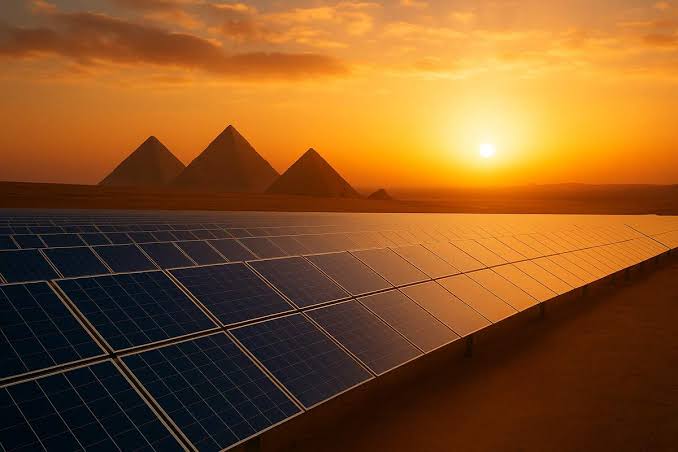
Egypt is stepping up renewable energy and water-reuse investment as climate action increasingly becomes an economic imperative, with wind capacity rising 16.3% in 2024 and water-treatment and reuse projects reaching annual capacity of about 4.8 billion cubic meters, according to the African Development Bank.
The figures point to a green transition increasingly driven by energy and water security, investment needs, industrial competitiveness and resource management—not environmental policy alone.
Egypt added 309 megawatts (MW) of wind capacity in 2024, taking total capacity to 2,199 MW from 1,890 MW a year earlier, according to a government report.
The country aims to raise renewables’ share of electricity generation to more than 42% by 2030 and above 60% by 2040.
The push comes as electricity demand rises with population growth and industrial activity, while the government seeks to reduce the economic pressures associated with energy imports and strengthen domestic supply.
Renewables can help diversify the power mix, but scaling up generation will require investment in transmission, grid management, storage and system balancing.
Water security presents an even more immediate challenge.
Egypt’s annual per-capita water share has fallen below 500 cubic meters, less than half the 1,000-cubic-meter threshold commonly used to define water poverty, according to the government report.
The response includes wastewater treatment, agricultural drainage reuse, desalination and more efficient irrigation.
Treatment and reuse projects now have annual capacity of about 4.8 billion cubic meters, turning water infrastructure into an economic tool aimed at protecting agricultural production, urban development and industrial activity.
Egypt’s green infrastructure push is also creating a growing role for private and development finance.
The country has already attracted international capital to major renewable projects, including a 1.1-gigawatt Gulf of Suez wind project that secured $275 million in financing from international financial institutions in 2024.
The experience highlights a broader challenge for Africa: abundant renewable resources alone are not enough. Projects also need bankable structures, reliable transmission networks, supportive regulation and access to affordable long-term capital.
For Egyptian businesses, the green transition is increasingly tied to international market access.
The European Union’s Carbon Border Adjustment Mechanism became fully operational in January 2026, increasing pressure on exporters of carbon-intensive products.
Egypt’s Institute of National Planning has warned that carbon-border measures could affect the competitiveness of exports such as fertilizers unless producers improve energy efficiency, use cleaner electricity and establish reliable systems for measuring emissions.
As carbon-related requirements become embedded in global trade, emissions data and energy efficiency are increasingly becoming commercial considerations rather than voluntary sustainability disclosures.
Egypt is responding by developing tools aimed at attracting sustainable investment, including a voluntary carbon market and a sustainable-finance framework.
The Central Bank of Egypt began developing a sustainable-finance taxonomy in August 2025 to establish common criteria for environmentally and socially sustainable activities and give financial institutions and investors greater clarity over eligible projects.
The government is also seeking greater private-sector participation, technology transfer and cooperation with international financial institutions as it moves into the next phase of the transition.
Egypt’s green agenda extends beyond renewable power and water.
The country has expanded electric public transport through metro, monorail, light rail, high-speed rail and bus rapid transit systems, while industrial programs increasingly focus on pollution reduction, low-carbon hydrogen and a regulated voluntary carbon market.
Waste-management infrastructure has also expanded, with 29 sanitary landfills and 19 fixed transfer stations completed and delivered across several governorates in 2024.
The government has spent about EGP 4.2 billion to protect 210 kilometers of coastline from erosion and rising seas, highlighting the growing cost of climate adaptation for coastal economies.
The government is increasingly treating these areas as interconnected rather than separate policy tracks.
Energy production affects water availability; water security affects agriculture; agriculture affects food imports and foreign exchange; and industrial energy use increasingly affects export competitiveness.
The Nexus on Water, Food and Energy platform (NWFE), established in 2022, seeks to connect these areas and mobilize grants, concessional finance, debt instruments and private capital around investable projects.
That integrated approach has wider relevance for Africa, where energy shortages often overlap with water stress, food insecurity, urbanization and limited fiscal space.
The scale of Egypt’s green infrastructure push is significant, but financing, technology and implementation remain constraints.
Renewable-energy projects, water infrastructure, electric transport and waste-management systems can create demand for construction, engineering and technical services. The long-term economic benefit, however, will depend partly on stronger domestic supply chains and workforce capabilities.
Greater technology transfer and localization could help African economies capture more of the value generated by the green transition rather than relying heavily on imported equipment and external expertise.
The government report also calls for a shift from a proliferation of individual initiatives toward greater integration and more systematic measurement of their economic and environmental impact.
Egypt’s experience illustrates how sustainability is becoming increasingly tied to economic resilience.
Renewable power can diversify electricity supply, water reuse can protect scarce resources, cleaner industrial production can help preserve export access, and climate-adaptation projects can reduce exposure to future losses.
But scaling those gains will require more than individual projects. Egypt and other African economies will need stronger financial systems, reliable infrastructure, credible regulation, better emissions and impact measurement, technology transfer and greater private-sector participation.
The next phase of the green transition will therefore be measured not only by how many renewable-energy or water projects are built, but by how effectively those investments improve productivity, resource security and economic resilience.
Google and NASA’s Jet Propulsion Laboratory (JPL) have introduced an AI model that can track ...
The Global Cooling Pledge has launched a global heat resilience roadmap and a new manufacturing ...
Google has signed a new partnership with Terradot to support climate action across more than ...
Leave a comment