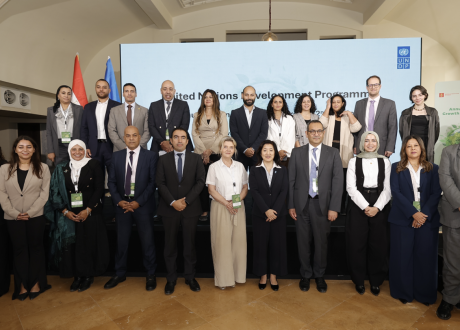
UNDP Egypt Conf. pushes green, digital growth for SMEs, Youth
The United Nations Development Program (UNDP) in Egypt convened its second Annual Green Growth Conference ...
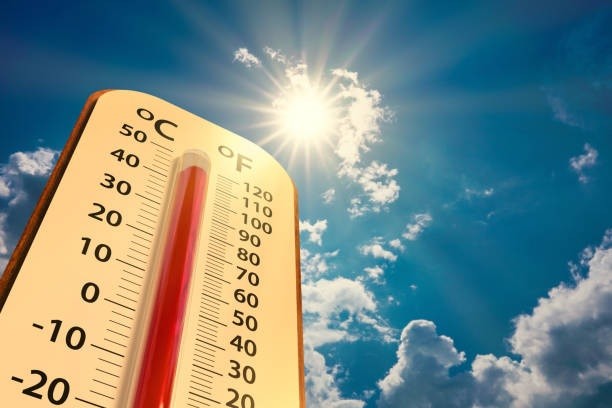
Global climate predictions show temperatures are expected to continue at or near record levels in the next five years, increasing climate risks and impacts on societies, economies and sustainable development, according to a new report from the World Meteorological Organization (WMO).
The WMO report forecasts that the annually averaged global mean near-surface temperature for each year between 2025 and 2029 is predicted to be between 1.2°C and 1.9°C higher than the average over the years 1850-1900.
There is an 80% chance that at least one year between 2025 and 2029 will be warmer than the warmest year on record (currently 2024). And there is an 86% chance that at least one year will be more than 1.5°C above the pre-industrial level. The report does not give global predictions for individual years.
There is a forecast 70% chance that the five-year average warming for 2025-2029 will be more than 1.5°C, according to the report. This is up from 47% in last year’s report (for the 2024-2028 period) and up from 32% in the 2023 report for the 2023-2027 period.
Every additional fraction of a degree of warming drives more harmful heatwaves, extreme rainfall events, intense droughts, melting of ice sheets, sea ice, and glaciers, heating of the ocean, and rising sea levels.
“We have just experienced the ten warmest years on record. Unfortunately, this WMO report provides no sign of respite over the coming years, and this means that there will be a growing negative impact on our economies, our daily lives, our ecosystems and our planet,” said WMO Deputy Secretary-General Ko Barrett.
“Continued climate monitoring and prediction is essential to provide decision-makers with science-based tools and information to help us adapt,” she said.
WMO’s State of the Global Climate 2024 report released in March confirmed that 2024 was likely the first calendar year to be more than 1.5°C above the 1850-1900 average. It was the warmest year in the 175-year observational record.
The current level of warming already drives more harmful heatwaves, extreme rainfall events, intense droughts, melting of ice sheets, sea ice, and glaciers, heating of the ocean, and rising sea levels.
Under the Paris Agreement, countries agreed to hold the increase in long-term global average surface temperature well below 2°C above pre-industrial levels and pursue efforts to limit the increase to 1.5°C. The scientific community has repeatedly warned that warming of more than 1.5°C risks unleashing far more severe climate change impacts and extreme weather and every fraction of a degree of warming matters.
This year’s UN climate change conference, COP30, will consider updated climate action plans known as Nationally Determined Contributions which are crucial for achieving the Paris Agreement goals.
The United Nations Development Program (UNDP) in Egypt convened its second Annual Green Growth Conference ...
JPMorganChase has pledged approximately $3.5 million to organizations across Greater Boston to expand access to ...
L&G and NTR have secured cornerstone commitments from four returning investors for their second joint ...

Leave a comment