JPMorganChase pledges $3.5mln to boost jobs, small businesses in Boston
JPMorganChase has pledged approximately $3.5 million to organizations across Greater Boston to expand access to ...
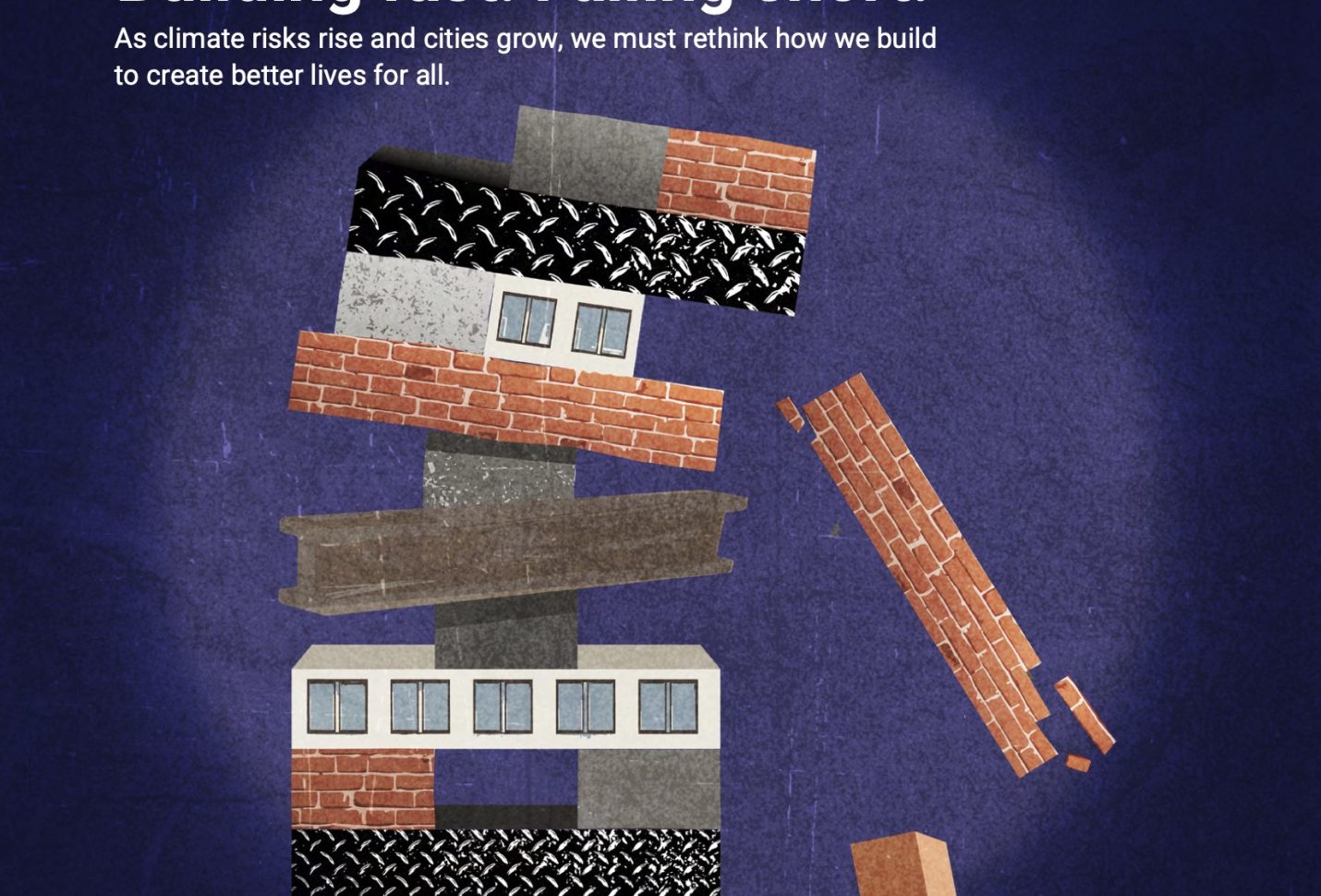
World needs $ 5.9 trillion in investment in building energy efficiency by 2030 to keep the global buildings sector aligned with net-zero climate goals, as decarbonisation efforts slow despite gains in energy efficiency and green construction, according to a new report released by the United Nations Environment Program (UNEP) and the Global Alliance for Buildings and Construction.
The Global Status Report for Buildings and Construction 2025-2026 found that the sector’s green transition has failed to keep pace with rapid construction growth worldwide, leaving buildings increasingly exposed to climate risks, energy price volatility, and rising affordability pressures.
Buildings’ operational emissions increased by 1% in 2024 to reach 9.9 gigatonnes of CO₂, while the sector accounted for 37% of global emissions, 28% of global energy consumption, and nearly half of global material extraction.
Global building floor area expanded by 1.7% last year to 273 billion square metres, driven largely by construction activity in emerging economies including India and Southeast Asia. The report estimated that the world is adding around 12.7 million square meters of new floor space every day — nearly equivalent to building the city of Paris every week.
Despite the challenges, the report highlighted progress in several areas since 2015. Global building energy intensity declined by 8.5%, while green building certifications nearly tripled during the period.
Investment in energy efficiency reached USD 275 billion in 2024, bringing cumulative investment since 2015 to USD 2.3 trillion. However, the report warned that current progress remains insufficient to meet the sector’s 2050 net-zero pathway.
Renewable energy supplied just 17.3% of buildings’ energy demand in 2024, well below the level needed to support global climate targets.
To close the gap, policymakers were urged to accelerate energy efficiency measures, phase out fossil fuels faster, and scale up financing for sustainable buildings. The report said annual investment in building energy efficiency needs to rise to USD 592 billion by 2030.
“From homes and schools to hospitals and workplaces, buildings play a fundamental role in our lives,” said Inger Andersen, Executive Director of UNEP.
She added that with nearly half of the world’s buildings still to be built or renovated by 2050, governments have a critical opportunity to drive zero-emission and climate-resilient construction through stronger policies, building codes, and investment.
The report also highlighted examples of progress across multiple regions. The European Union introduced policies targeting both operational and embodied emissions, while Japan and Switzerland improved building energy performance standards.
Australia, Germany, India, and Pakistan recorded growth in on-site renewable energy deployment in buildings, while California, Kenya, Japan, and Singapore updated building energy codes.
Meanwhile, green building certification expanded in China, Colombia, India, and Türkiye, while countries including Bangladesh, Indonesia, Jordan, Ghana, and Senegal developed national roadmaps to support the sector’s transition.
JPMorganChase has pledged approximately $3.5 million to organizations across Greater Boston to expand access to ...
L&G and NTR have secured cornerstone commitments from four returning investors for their second joint ...
French investment firm Hy24 has signed an agreement with EDF Pulse Ventures to acquire Hynamics, ...

Leave a comment