
JPMorganChase pledges $3.5mln to boost jobs, small businesses in Boston
JPMorganChase has pledged approximately $3.5 million to organizations across Greater Boston to expand access to ...
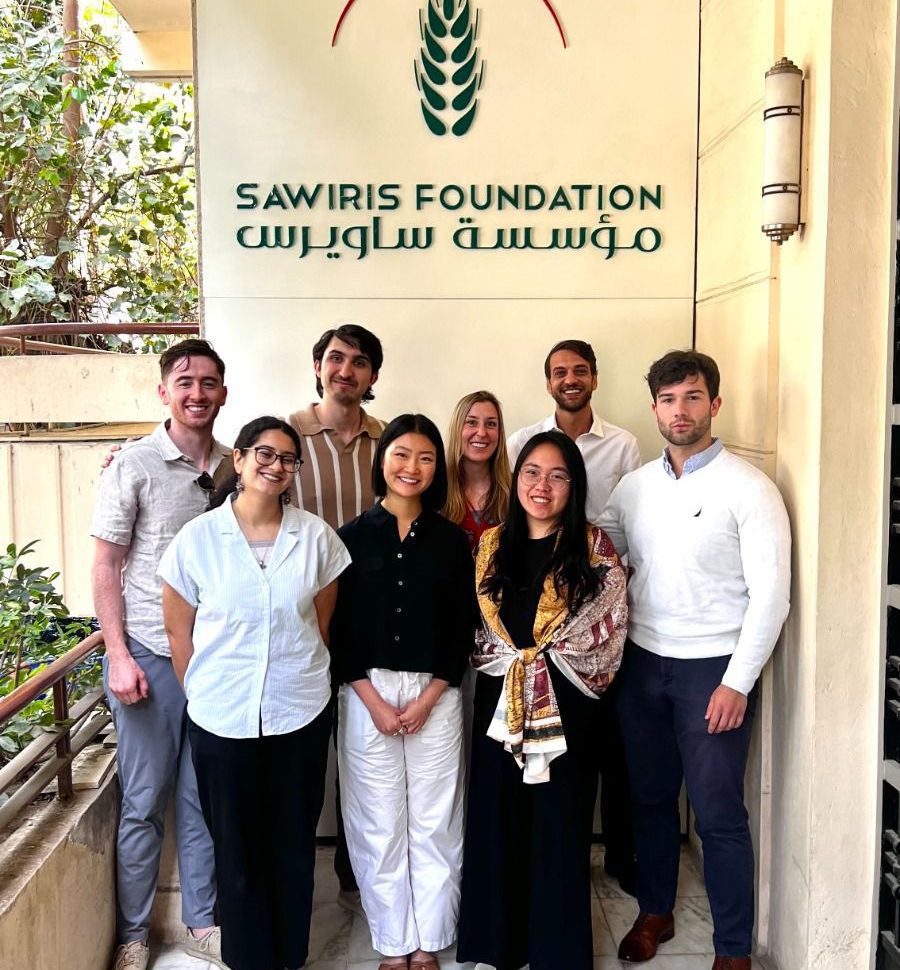
Sawiris Foundation for Social Development hosted a team of six students from Harvard Business School in Cairo as part of the FIELD Global Capstone program, an experiential learning initiative spanning 14 countries and 14 cities, involving more than 900 students and 156 partner organizations worldwide.
The Sawiris Foundation was selected as one of 156 FIELD Global Capstone project partners globally, placing it within an international network designed to expose students to real-world business and development challenges across diverse markets.
The program brought Harvard Business School students to Cairo for a one-week field immersion focused on applied learning and problem-solving in a local context.
Ahead of their arrival, Sawiris Foundation’s capacity-building team worked remotely with the student group over several months to prepare for the engagement.
Once in Cairo, the students operated from the Foundation’s headquarters, where they pitched early concepts to leadership, conducted field research with beneficiaries across the city, and refined their recommendations based on real-world insights.
Their final presentations were delivered directly to the Foundation’s management team following the fieldwork phase.
Laila Hosny, Executive Director of Sawiris Foundation, and Mays Abou Hegab attended the final presentations and engaged with the students’ proposed solutions.
The FIELD Global Capstone is designed to develop students’ ability to operate in unfamiliar business environments through hands-on challenges, including designing new products, services, or customer experiences for partner organizations.
The program also emphasizes building contextual intelligence, teamwork, and adaptability while delivering practical value to host institutions.
The collaboration reflects Sawiris Foundation’s broader commitment to advancing experiential learning and institutional capacity building within Egypt’s civil society sector.
This initiative builds on the Foundation’s Capacity Building of Egyptian Non-Governmental Organizations Project, which includes the First Egyptian Civil Society Forum held under the auspices of the Ministry of Social Solidarity.
The Foundation has also established five civic training centers and trained 2,203 development workers, approximately 62% of whom are women, supporting efforts to enhance technical capabilities and strengthen participation in community development programs.
“We are pleased to collaborate with Harvard Business School through the FIELD Global Capstone program, which creates a meaningful space for knowledge exchange and shared learning between students and organizations working on the ground,” said Laila Hosny.
“For us, the value of this experience extends beyond the academic aspect, as it also opens a broader dialogue around local development challenges and how they can be addressed through practical and applicable solutions,” she added.
Hosny said the partnership reflects Sawiris Foundation’s commitment to investing in human capital and strengthening civil society institutions as key drivers of sustainable development.
“We are extremely grateful to Sawiris Foundation and all the FIELD Global Capstone Project Partner organizations for all they do on behalf of our students,” said Joe Fuller, Faculty Chair for the program at Harvard Business School.
“The students benefit immeasurably from this experience, and we hope the partner organizations do as well,” he added.
The Foundation said its collaboration with global academic institutions is part of a long-term strategy to promote innovation, cross-cultural learning, and inclusive development, building on more than 25 years of work across Egypt’s social development landscape.
JPMorganChase has pledged approximately $3.5 million to organizations across Greater Boston to expand access to ...
L&G and NTR have secured cornerstone commitments from four returning investors for their second joint ...
French investment firm Hy24 has signed an agreement with EDF Pulse Ventures to acquire Hynamics, ...

Leave a comment