
UNDP Egypt Conf. pushes green, digital growth for SMEs, Youth
The United Nations Development Program (UNDP) in Egypt convened its second Annual Green Growth Conference ...
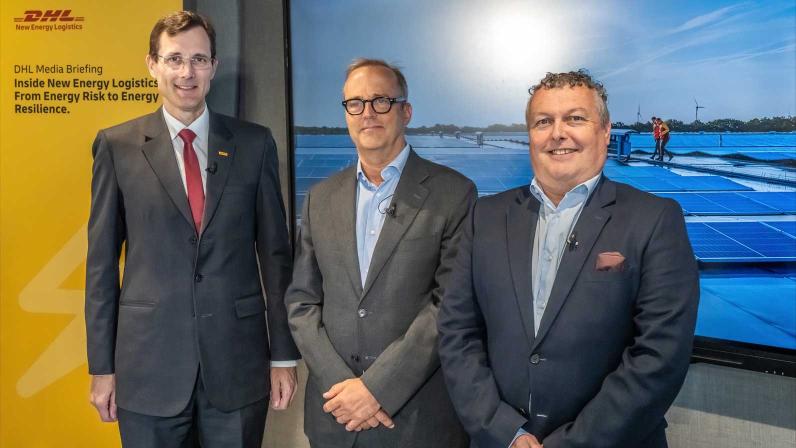
DHL Group is expanding its New Energy logistics business as governments and companies accelerate efforts to diversify energy sources, strengthen energy security, and build renewable energy capacity.
The logistics giant said it expects revenue from its New Energy logistics operations to grow from approximately €600 million in 2025 to €3 billion by 2030, supported by rising demand across sectors including electric vehicles, battery storage, hydrogen, solar, wind, grid infrastructure, and alternative fuels.
DHL identified New Energy as a key growth area under its Strategy 2030, unveiled in 2024, and has since invested significantly in capabilities across its global operations.
The company has developed end-to-end logistics solutions spanning eight major segments of the energy transition, leveraging expertise across DHL Express, DHL Global Forwarding, and DHL Supply Chain.
According to DHL, growing concerns over fossil fuel supply disruptions have reinforced the need for secure, resilient, and sustainable energy systems, creating new opportunities for specialized logistics services.
To support customers in the renewable energy sector, DHL is launching Time Definite Plus, a new logistics service designed for specialized and time-sensitive delivery requirements.
The service utilizes DHL Express’s existing network while offering customized solutions such as timed deliveries, special handling requirements, Swap & Return services, and deliveries to challenging or remote locations.
Initially available across 22 countries and territories in Europe, the service is expected to expand globally in the future.
DHL said the wind energy sector has entered a new phase of growth, with global installed wind capacity reaching approximately 1.3 terawatts (TW).
As wind farms increasingly move from construction to long-term operation, the company sees growing demand for maintenance, repair, and overhaul (MRO) logistics services.
DHL’s network includes more than 1,100 front-stocking locations capable of delivering spare parts within four hours to 88% of wind farms worldwide. The company said this network helps reduce downtime and supports the reliability of renewable energy infrastructure.
Customers can select different service levels depending on operational requirements, ranging from urgent delivery of large critical components to standard delivery of lower-cost replacement parts.
DHL is also investing heavily in the electric vehicle and battery supply chain ecosystem.
The company recently began construction of a new European Battery Logistics Hub in Holtum, the Netherlands, aimed at expanding its capabilities in battery and energy storage logistics.
The facility will provide 17,000 square meters of specialized storage and service space for high-voltage batteries used in electric vehicles and battery energy storage systems (BESS), including residential storage and solar energy applications.
Located adjacent to DHL Supply Chain’s existing automotive operations, the site is expected to become part of an integrated logistics campus serving electric mobility and energy markets across Europe. The hub is scheduled to begin operations in early 2027.
DHL has also opened an Electric Vehicle and Battery Center of Excellence in Meung-sur-Loire, France, and is expanding additional facilities nationwide.
The center provides compliant storage and distribution services for EV components and batteries, supporting both manufacturing supply chains and aftermarket operations. The facility also incorporates battery recycling solutions through specialized partners.
Globally, DHL now operates more than 20 EV Centers of Excellence, with new facilities planned in India and Peru later this year.
To further support battery logistics, DHL is offering customers its Thermoliner solution, a patented insulation system designed to protect sensitive cargo from extreme temperatures and humidity.
The technology also helps safeguard shipments from thermal shocks, condensation, and cross-contamination, supporting the safe transport of batteries and other temperature-sensitive products.
DHL executives said the transition to new energy systems requires supply chains that can operate reliably at scale while supporting multiple technologies and markets.
The company believes its integrated capabilities across infrastructure development, manufacturing logistics, transportation, delivery, maintenance, decommissioning, and circular economy services position it to play a central role in the evolving energy ecosystem.
As investment in renewable energy and electrification continues to accelerate globally, DHL is betting that New Energy logistics will become one of its most significant growth engines over the remainder of the decade.
The United Nations Development Program (UNDP) in Egypt convened its second Annual Green Growth Conference ...
JPMorganChase has pledged approximately $3.5 million to organizations across Greater Boston to expand access to ...
L&G and NTR have secured cornerstone commitments from four returning investors for their second joint ...

Leave a comment