
WHO releases $150,000 as Nepal flood death toll tops 730
The World Health Organization (WHO) has released $150,000 from its South-East Asia Regional Health Emergency ...
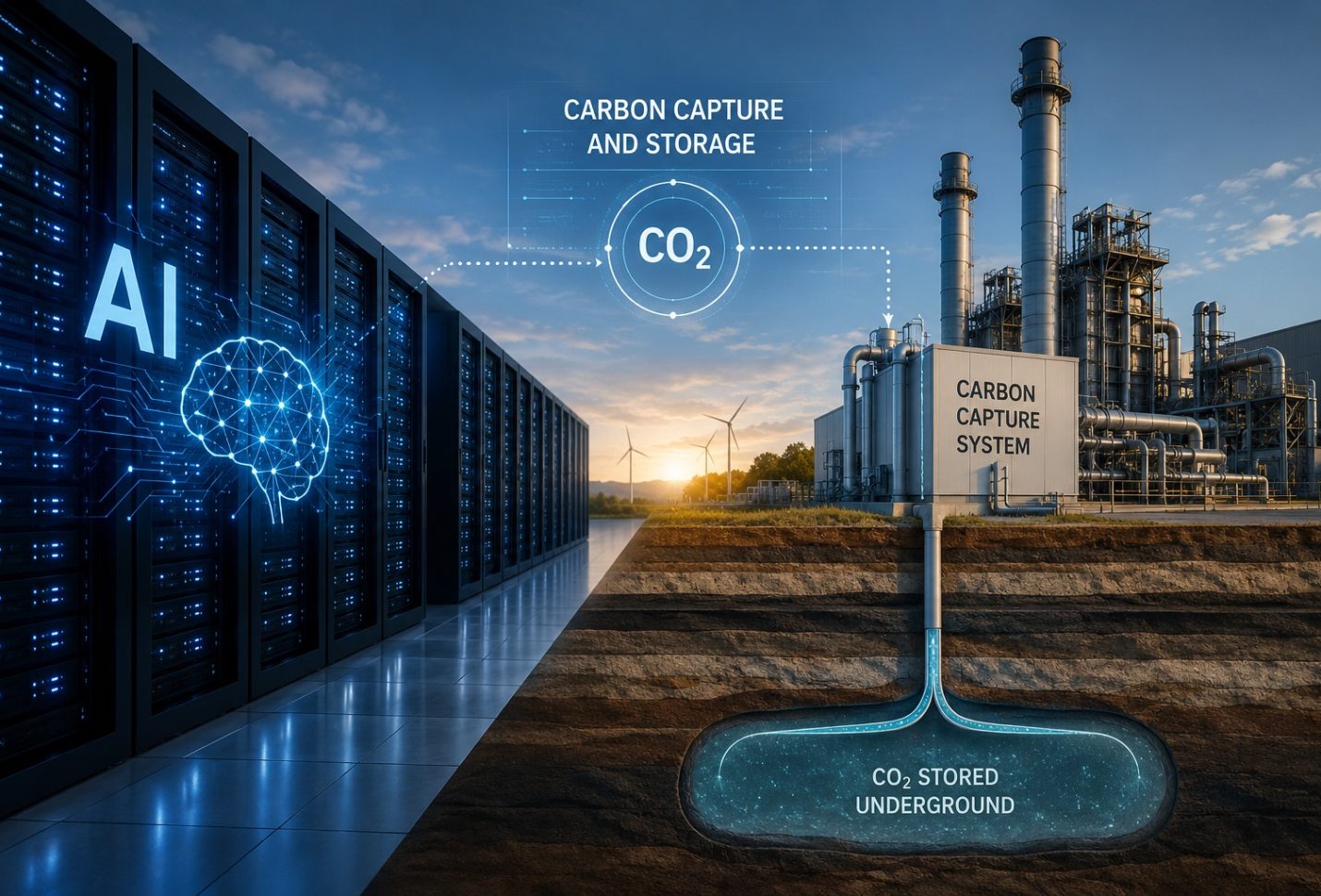
More than 90% of US data center emissions could be mitigated through carbon capture and storage (CCS), according to new research that highlights a potential solution to one of artificial intelligence’s biggest climate challenges.
The study, published in Energy & Fuels, projects that US data center power demand will climb from 40 GW in 2025 to 169 GW by 2030, pushing annual carbon dioxide emissions from fossil fuel-powered electricity generation from 90 million metric tons to more than 404 million metric tons without additional emissions measures.
The research, co-authored by Hon Chung Lau, adjunct professor at Rice University and founder of Low Carbon Energies LLC, and Steve C. Tsai, an energy transition consultant at the company, analyzed publicly announced US data center projects, their projected power demand, energy sources and locations.
The strongest growth is expected in Texas, Virginia, Pennsylvania, Ohio, Arizona, Colorado, Utah and Illinois, with Texas alone projected to require an additional 25 GW of power capacity by 2030 to support rising AI demand.
“Data centers are becoming one of the defining energy challenges of the AI era,” Lau said. “The question is not only whether we can build enough computing infrastructure, but whether we can power it in a way that is reliable, affordable and compatible with decarbonization goals.”
Because AI data centers require reliable, around-the-clock electricity, the researchers argue that natural gas combined-cycle power plants equipped with carbon capture and storage could provide one of the most practical near-term pathways for supplying low-carbon power.
The study found that 34 US states have enough underground saline aquifer capacity to store more than 100 years of projected data center-related CO₂ emissions beyond 2030.
By the numbers:
The researchers note that the projections are conservative because they only include data centers with publicly announced power requirements. They also assume that where companies did not disclose electricity sources, power would come from the state grid and that each state’s electricity mix would remain unchanged through 2030.
While carbon capture is not presented as the only solution, the study argues that existing US geology provides a significant opportunity to reduce the climate impact of AI-driven data center expansion and offers a state-by-state framework for balancing digital infrastructure growth with decarbonization goals.
“The AI economy will require enormous amounts of energy,” Lau said. “Our study helps identify where that demand is growing, where emissions are likely to rise and where carbon storage could help.”
The World Health Organization (WHO) has released $150,000 from its South-East Asia Regional Health Emergency ...
The Food and Agriculture Organization of the United Nations (FAO) has secured LEED Gold certification ...
Royal Philips has priced EUR 650 million in fixed-rate notes due 2034, marking the healthcare ...


Leave a comment