UNDP Egypt Conf. pushes green, digital growth for SMEs, Youth
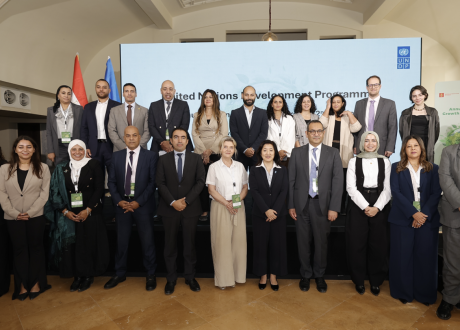
The United Nations Development Program (UNDP) in Egypt convened its second Annual Green Growth Conference ...
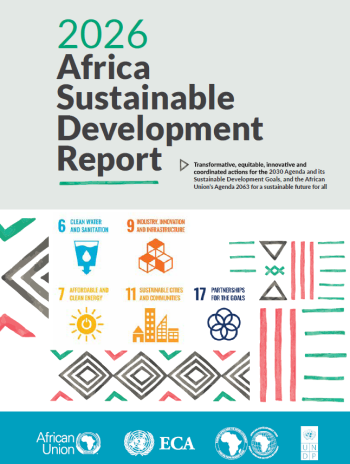
Egypt leads Africa in research and development (R&D) investment and stands out in port efficiency, data infrastructure and AI, according to the 2026 Africa Sustainable Development Report (ASDR).
Egypt devoted 0.8% of its GDP to R&D over 2015–2023, the highest share among African countries cited in the report. Rwanda followed at 0.73%, South Africa at 0.67%, Tunisia at 0.66%, Namibia at 0.65%, Kenya at 0.61% and Senegal at 0.58%.
The ASDR says Egypt’s position reflects sustained efforts to strengthen its national innovation system, particularly through national science, technology and innovation strategies integrated into its economic development plans.
Egypt also recorded 724 researchers per million inhabitants over 2015–2023, placing it among North African countries with significantly higher researcher densities than the continental average.
The report says R&D spending is essential to stimulate technology adoption, strengthen local productive capacities and support inclusive and sustainable growth. It highlights tax incentives, public-private partnerships and the integration of R&D into national development strategies as measures to strengthen investment.
Egypt’s Port Said secured third place worldwide in the 2024 Container Port Performance Index (CPPI), with a score of 137.4, identifying it as Africa’s most efficient container port.
The index, produced by the World Bank and S&P Global Market Intelligence, attributes the port’s performance to structural reforms, infrastructure investment and enhanced logistics operations that have reduced vessel turnaround times and improved cargo handling.
The report highlights Port Said as a key gateway on global trade routes and says its performance reflects Egypt’s focus on modernizing maritime facilities and integrating them into broader transport and logistics networks.
Egypt recorded a 75 score on the data infrastructure performance index in 2023, making it one of Africa’s top-performing countries alongside South Africa, Senegal, Kenya and Mauritius.
The index measures the readiness and effectiveness of national statistical systems. North Africa’s score rose to 57.48 in 2023, with Egypt and Tunisia making notable contributions.
The report says the sustained improvement across Africa is likely underpinned by stronger institutional commitment and targeted implementation efforts. It describes the top-performing countries as having advanced data-related technological infrastructure and robust institutional frameworks.
The ASDR describes Egypt as North Africa’s leading AI hub, citing its large talent pool, strategic geographical location and strong government backing for digital transformation.
In the second quarter of the 2025 fiscal year, North Africa led African venture capital deal flows for the first time in five years, while Egypt surpassed $300 million in funding during the first half of FY2025, according to the report.
It recommends strengthening investment-promotion frameworks by expanding digital infrastructure, harmonizing regulatory frameworks, leveraging the African Continental Free Trade Area (AfCFTA), strengthening domestic capital markets and prioritizing employment generation, technology transfer and industrial upgrading.
The report highlights Egypt’s “Housing for All Egyptians” initiative as a response to uncontrolled urban growth, environmental degradation and precarious living conditions.
As of 2025, the initiative had delivered more than 1 million housing units, benefited 3 million low- and middle-income citizens, created 4.2 million jobs across 70 industries and significantly reduced slums, according to the report.
The report says R&D investment across Africa remains substantially below global benchmarks. Global R&D spending stood at 1.95% in 2022, compared with Egypt’s 0.8% over the 2015–2023 period.
It emphasizes the need for stronger public policies to support R&D, including tax incentives, public-private partnerships and the integration of research and development into national development strategies.
The United Nations Development Program (UNDP) in Egypt convened its second Annual Green Growth Conference ...
JPMorganChase has pledged approximately $3.5 million to organizations across Greater Boston to expand access to ...
L&G and NTR have secured cornerstone commitments from four returning investors for their second joint ...

Leave a comment