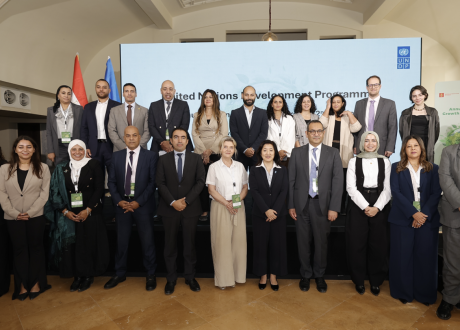
UNDP Egypt Conf. pushes green, digital growth for SMEs, Youth
The United Nations Development Program (UNDP) in Egypt convened its second Annual Green Growth Conference ...

Vodafone Group reported significant progress on its climate strategy in 2025, highlighted by a 93% reduction in operational emissions in Germany and the achievement of its target to collect 1 million used mobile devices for reuse, recycling, or donation, as the telecom giant advanced efforts to decarbonize its operations, supply chain, and products.
Vodafone Germany became the Group’s first European market to achieve net-zero emissions from its own operations after cutting Scope 1 and 2 emissions by 93% compared with 2020 levels and neutralizing its remaining emissions through carbon removal projects.
The company remains on track to reach net-zero operations across Europe by 2028 and Africa by 2035, while continuing to match 100% of purchased grid electricity with renewable energy sources through power purchase agreements and renewable energy certificates.
With 96% of Vodafone’s total emissions stemming from its value chain, the company continued expanding efforts to address Scope 3 emissions. During the year, Vodafone onboarded 60% of its strategic suppliers onto a new climate platform designed to track and accelerate supplier decarbonization efforts.
The company also worked through the Joint Alliance for Corporate Social Responsibility (JAC) to help 46 suppliers identify and implement emissions-reduction actions.
Vodafone continued improving energy efficiency across its global networks by deploying next-generation radio equipment, activating intelligent power-saving features, and scaling AI-enabled energy management tools.
The initiatives are aimed at reducing energy consumption while maintaining reliable connectivity for millions of customers.
To support the transition to cleaner energy systems, Vodafone launched battery storage pilots in the Czech Republic and the UK, exploring how grid-connected batteries can improve electricity system flexibility and support greater renewable energy integration.
The company also expanded solar-powered mobile sites across its markets and operationalized its first virtual wheeling project in South Africa, enabling renewable electricity generated by independent producers to be delivered through the grid at scale.
In Mozambique, Vodafone trialed a hybrid diesel generator control system that switches to battery power whenever possible during outages, helping reduce diesel consumption and associated emissions.
Vodafone continued advancing circularity across both network infrastructure and customer devices. The company generated 7,731 metric tonnes of network equipment e-waste during the year and launched a pan-European recycling tender aimed at maximizing material recovery while minimizing landfill and incineration.
For consumer devices, Vodafone expanded trade-in, repair, and second-life programs, reaching its goal of collecting 1 million used mobile devices through its partnership with the World Wildlife Fund (WWF).
The company also reported that more than 99% of devices returned through its Device Lifecycle Management leasing program for business customers were successfully redeployed in 2025.
Vodafone’s climate and sustainability efforts earned continued recognition during the year. The company was included on CDP’s prestigious A List for climate leadership and received an EcoVadis Platinum rating for the second consecutive year, placing it among the top 1% of companies assessed globally for sustainability performance.
Looking ahead, Vodafone plans to further leverage AI and automation to optimize energy use, expand renewable energy deployment, deepen supplier engagement, and scale circular economy initiatives as it works toward its long-term net-zero ambitions.
The United Nations Development Program (UNDP) in Egypt convened its second Annual Green Growth Conference ...
JPMorganChase has pledged approximately $3.5 million to organizations across Greater Boston to expand access to ...
L&G and NTR have secured cornerstone commitments from four returning investors for their second joint ...

Leave a comment