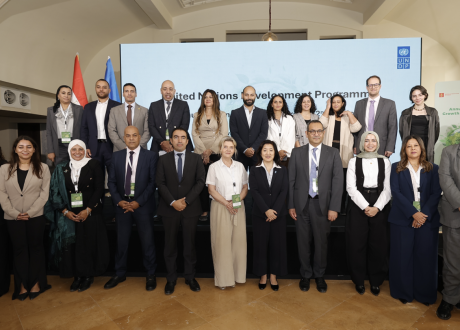
UNDP Egypt Conf. pushes green, digital growth for SMEs, Youth
The United Nations Development Program (UNDP) in Egypt convened its second Annual Green Growth Conference ...

Egyptian executives account for 15 entries in Forbes Middle East’s sixth annual ranking, spanning banking, real estate, healthcare, pharmaceuticals and other sectors.
The broader list features 102 individuals across 100 entries, representing 21 nationalities and 29 sectors. Emiratis lead with 31 executives, followed by Egyptians with 15 and Saudis with 13.
NBE, CIB CEOs among top Egyptian leaders:
Among them are Mohamed el-Etreby of National Bank of Egypt (NBE), Hisham Okasha of Banque Misr and Hisham Ezz Al-Arab of Commercial International Bank (CIB), underscoring the strong presence of Egyptian banking leaders in the regional ranking.
Banking and financial services is the largest sector in the overall ranking, accounting for 30 entries.
The 15 Egyptian executives:
The full list of Egyptian executives featured in the ranking includes:
Broader CEO mandate:
Forbes says the role of the Middle East CEO has expanded beyond traditional corporate leadership, with executives increasingly navigating technological disruption, geopolitical uncertainty and evolving capital markets.
The 2026 ranking highlights the region’s growing investment in AI, digital infrastructure, the energy transition and advanced manufacturing, alongside continued diversification and cross-border expansion.
The United Nations Development Program (UNDP) in Egypt convened its second Annual Green Growth Conference ...
JPMorganChase has pledged approximately $3.5 million to organizations across Greater Boston to expand access to ...
L&G and NTR have secured cornerstone commitments from four returning investors for their second joint ...

Leave a comment