Greenpeace: Energy transition could boost Saudi, UAE economic resilience by 2040
Saudi Arabia and the UAE could strengthen their long-term economic resilience by 2040 through economic ...
Saudi Arabia and the UAE could strengthen their long-term economic resilience by 2040 through economic diversification, renewable energy investment and targeted electrification, rather than further expanding fossil fuel production, according to a new report by Greenpeace MENA.
The report, Rethinking Long-Term Economic Development: Comparative Pathways for Saudi Arabia and the United Arab Emirates, examines how alternative development strategies could strengthen public finances and reduce the two countries’ exposure to volatility in global energy markets, taking into account their different economic circumstances.
The research challenges the assumption that expanding fossil fuel production is necessary to maintain fiscal stability or finance the energy transition. While existing hydrocarbon revenues can help fund the shift, further investment in production capacity risks reinforcing the dependence that economic diversification aims to reduce.
The report compares continued hydrocarbon expansion with transition scenarios at different speeds, assessing their performance across seven economic environments.
By 2040, transition pathways outperform continued fossil fuel expansion in six of the seven scenarios, with the latter retaining a marginal advantage only under high oil prices.
Under a severe downside scenario combining a 40% decline in oil prices with a 15% reduction in revenue volumes, a faster, managed decline in fossil fuel production and use improves the annual fiscal balance in 2040 by approximately 5.3 percentage points of GDP in Saudi Arabia and 5.1 percentage points in the UAE, compared with continued expansion.
Fiscal diversification key to transition success:
The report stresses that the economic benefits of a faster energy transition depend on early and meaningful diversification of government revenues alongside reductions in fossil fuel production.
It also highlights the need to tailor transition strategies to each country’s economic circumstances. Saudi Arabia’s fiscal structure makes diversifying government revenue sources particularly important to supporting a sustainable economic transition.
The UAE, meanwhile, has greater recent flexibility in its fiscal flows but still faces decisions over capital allocation, liquid financial buffers and coordination of investment across public institutions.
For both countries, the report recommends directing existing hydrocarbon wealth towards productive economic activity and a managed transition, rather than using continued dependence on fossil fuel revenues to justify indefinite production expansion.
Solar power offers lower-cost electricity generation:
Beyond fiscal policy, the report identifies renewable energy as a competitive economic opportunity for both countries.
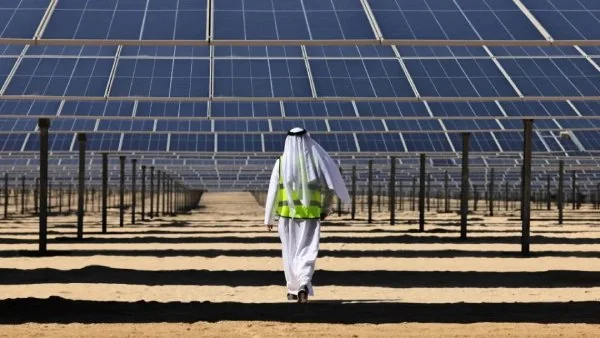
Utility-scale solar photovoltaic power offers the lowest-cost option for new electricity generation in Saudi Arabia and the UAE, outperforming new gas-fired generation under the study’s assumptions.
However, capitalizing on this advantage will require investment in electricity grids, system flexibility and energy storage to support the integration of renewable power.
Targeted electrification could accelerate economic gains:
The research also identifies opportunities to accelerate electrification in sectors where its economic and climate benefits can be demonstrated, rather than applying a uniform approach across the economy.
Transport emerges as the leading near-term opportunity for electrification, highlighting the potential for targeted measures to support emissions reductions while strengthening the economic case for the transition.
Saudi Arabia and the UAE could strengthen their long-term economic resilience by 2040 through economic ...
DSV has partnered with Google Cloud to secure up to 9.7 million liters of sustainable ...
Amazon has launched an artificial intelligence-powered tool that enables companies to measure the carbon footprints ...

Leave a comment