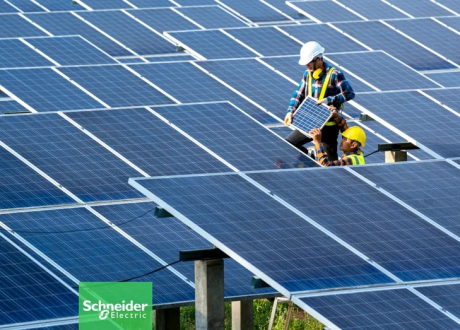
Solar, batteries could slash electricity costs by 40% by 2030s: Schneider
Schneider Electric has published a new study projecting that total electricity system costs could fall ...

Climate finance for developing countries could reach between $1.27 trillion and $1.41 trillion annually by 2035, up from a projected $458 billion to $461 billion under business-as-usual scenarios, according to a new report presented by the COP30 Presidency.
Titled Implementing the Baku to Belém Roadmap to 1.3T, the report outlines financial pathways and policy measures that could help mobilize the funding needed to meet the global climate finance target.
The report identifies six sources of finance that could collectively contribute to the target: concessional finance, private investment, South-South cooperation, channeling Special Drawing Rights (SDRs), innovative financing mechanisms and carbon markets.
It builds on the Baku to Belém Roadmap to 1.3T, jointly presented by the COP29 and COP30 Presidencies in November 2025. The roadmap established five interconnected action areas — replenishing, rebalancing, rechanneling, revamping and reshaping — supported by more than 75 proposed measures.
The latest report provides further estimates of how different financing sources could contribute to mobilizing at least $1.3 trillion annually by 2035.
The COP30 Global Mutirão Decision called on parties to “urgently advance actions to enable the scaling up of climate finance for developing countries, from all public and private sources, to at least $1.3 trillion per year by 2035”.
The report introduces a 5×5 Implementation Framework, developed alongside the Independent High-Level Expert Group on Climate Finance, linking the roadmap’s five action areas with major investment priorities.
It is structured around three pillars: country-led investment, coalitions to accelerate key transitions, and mobilizing the $1.3 trillion capital stack.
It also introduces the Climate Finance Action Compass, an updated monitoring tool developed using Climate Policy Initiative (CPI) resources to track progress across four dimensions: scale, speed, reach and impact.
The tool assesses whether climate finance is growing at the required pace, reaching countries and sectors most in need, and delivering measurable climate and development outcomes.
The report comes ahead of the launch of the Paris Agreement’s second Global Stocktake at COP31 in Antalya, Türkiye. It also complements two COP30 Presidency roadmaps addressing the transition away from fossil fuels in energy systems and efforts to halt and reverse deforestation and forest degradation by 2030.
In the report’s foreword, COP30 President Ambassador André Corrêa do Lago said that “the evidence exists, the instruments are known”, pointing to the tools already available to governments, central banks, development banks and investors.
The COP30 Presidency called for stronger cooperation among governments, multilateral financial institutions, regulators, investors and civil society, building on the Global Mutirão initiative launched in Belém.
Schneider Electric has published a new study projecting that total electricity system costs could fall ...
Climate finance for developing countries could reach between $1.27 trillion and $1.41 trillion annually by ...
Countries have endorsed a COP31 presidency pledge to increase electricity’s share of global final energy ...


Leave a comment