
5% of Juhayna’s pink product profits back Baheya’s cancer fighters
Juhayna Food Industries is allocating 5% of the profits from its pink products during October ...
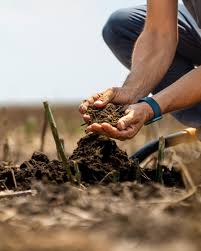
Agreena, a European soil carbon platform, has landed a seven-year agreement to supply 4.45 million tons of CO2e in soil carbon credits, in what the company described as the largest publicly communicated agreement to date in agricultural carbon.
The deal covers farmland in northern Kazakhstan, where Agreena is targeting 1.6 million hectares under regenerative management by 2028. Revenue from the agreement will support farmers in transitioning away from conventional farming practices while rebuilding soil health, reducing soil organic carbon losses and strengthening long-term farm resilience.
Verra project:
The credits will be generated through AgreenaCarbon Kazakhstan, which is currently undergoing validation under Verra’s Verified Carbon Standard using methodology VM0042 v2.2 for Improved Agricultural Land Management. The project is Agreena’s second Verra project.
Agreena’s flagship AgreenaCarbon Project, meanwhile, is the largest agricultural cropland initiative globally to have been verified under Verra’s Verified Carbon Standard.
Growing demand:
The agreement comes as demand for large-scale carbon credit supply grows, with buyers increasingly committing to volumes years ahead of issuance. Agreena said its seven-year commitment provides farmers with greater economic certainty while helping build supply for the forward carbon market.
“This is a defining moment for Agreena and for the carbon market, as soil carbon cements its role at scale,” said Frederik Aagaard, Chief Commercial Officer at Agreena.
Operating across approximately 5 million hectares, Agreena said its platform is designed to meet demand in both spot and forward carbon markets.
Restoring soil health:
Northern Kazakhstan’s grain belt is home to Chernozem soils that have lost an estimated 28% to 30% of their humus content after decades of conventional farming. The project aims to restore soil health while improving farms’ resilience to drought and other climate pressures.
For farmers, the transition is expected to bring immediate cost and environmental benefits. Moving away from conventional tillage can save 40 to 60 liters of diesel per hectare, while retaining crop residues helps preserve moisture in a region that receives just 300 to 450 millimeters of rainfall annually.
Biodiversity gains:
Ending stubble burning is expected to reduce particulate and nitrogen oxide pollution in surrounding rural communities. Reduced soil disturbance and the use of off-season cover crops are also expected to support biodiversity across farmland and nearby grasslands.
The landscape is home to species including the critically endangered Sociable Lapwing and endangered Steppe Eagle.
“Soil carbon credits are unique in the value they provide beyond the measurable tons of carbon reduced and removed,” Aagaard said, highlighting co-benefits including greater biodiversity, improved soil health and increased resilience to drought and flooding.
Juhayna Food Industries is allocating 5% of the profits from its pink products during October ...
Egypt accounts for 14 entries in Forbes Middle East’s Sustainability Leaders 2026 list, which features ...
Crédit Agricole Egypt Foundation for Development has partnered with Samusocial International Egypte to improve living ...


Leave a comment