UNDP Egypt Conf. pushes green, digital growth for SMEs, Youth
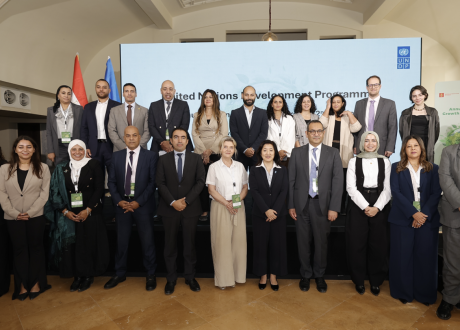
The United Nations Development Program (UNDP) in Egypt convened its second Annual Green Growth Conference ...
Implementing 25 measures to tackle climate change and air pollution together could halve global CO2 emissions by 2050, prevent 144 million premature deaths and deliver major economic gains, while every year of delay could cost more than $1.5 trillion, according to a new report by the United Nations Environment Program (UNEP) and the Climate and Clean Air Coalition (CCAC).
$15 Return on every $1:
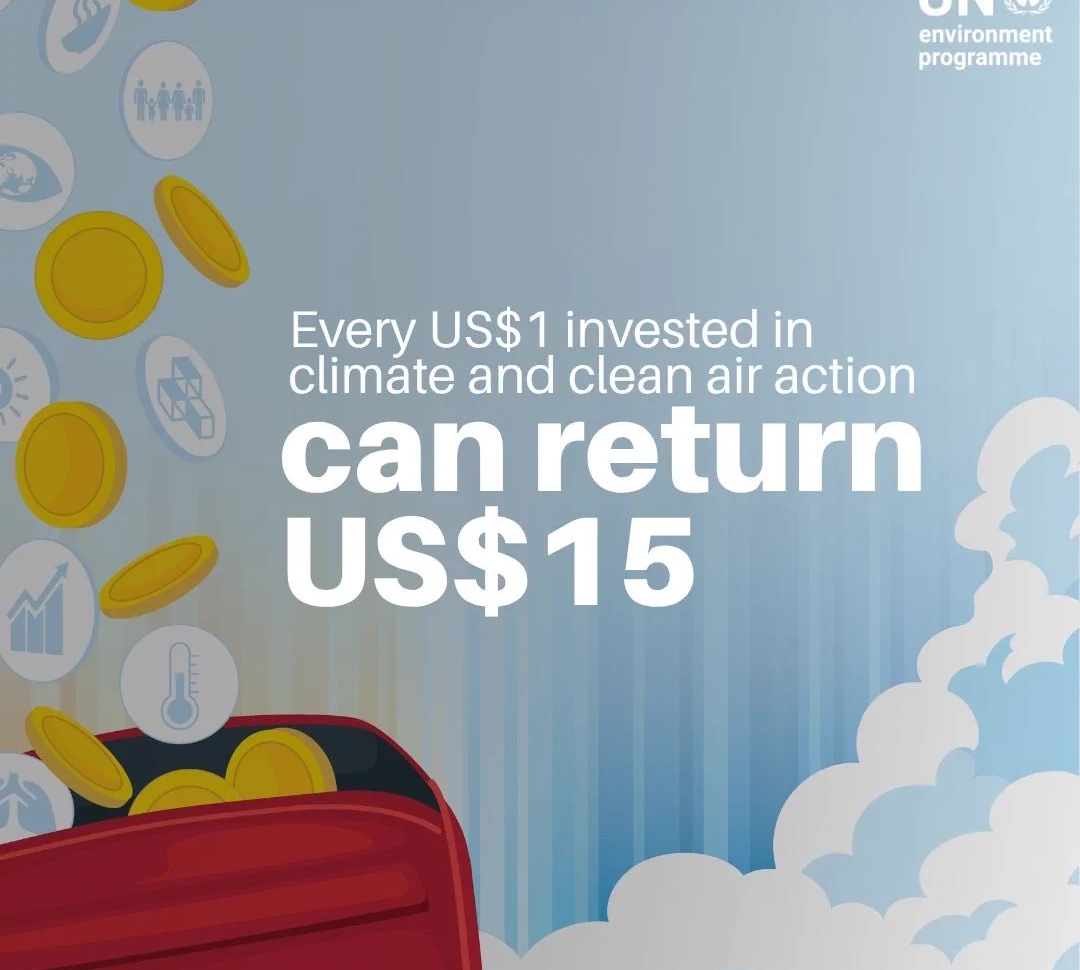
The report, Hidden Assets: The Economic and Health Case for Climate and Clean Air Action, found that every $1 invested in integrated climate and clean-air action could generate around $15 in economic benefits.
Even excluding non-market benefits, the measures could return around $4 for every $1 invested.
The annual economic benefits would reach the equivalent of 2.8% of global GDP in 2035, 4.5% in 2050 and 11.4% in 2100.
$1.5 trln cost of delay:
Every year of delayed action would forgo more than $1.5 trillion in combined market and non-market benefits, equivalent to around 0.5% of global GDP.
Institutional barriers, including fragmented decision-making, limited enforcement capacity and weak government coordination, could delay full implementation by almost eight years globally.
Addressing these barriers through fiscal incentives, regulation and stronger coordination could accelerate deployment and unlock up to $10 trillion in additional health benefits by 2040.
25 measures across six sectors:
The package spans six sectors: energy and fossil fuel systems, industry, transport, agriculture and food, residential cooking and heating, and waste management.
Measures include expanding renewable energy and energy efficiency, scaling up clean cooking and heating, tightening vehicle emissions standards, deploying electric vehicles, reducing oil and gas leaks, improving livestock and fertilizer management, cutting crop burning, improving waste management and phasing down hydrofluorocarbons.
144 mln deaths prevented:
Full implementation could cumulatively prevent 144 million air pollution-related premature deaths by 2050, including 96 million linked to outdoor air pollution alone.
In 2025, human-caused outdoor air pollution was associated with an estimated 6.4 million premature deaths worldwide, while household air pollution contributed another 2 million.
The measures could also prevent hundreds of millions of cases of chronic disease and reduce pressure on healthcare systems while boosting labur productivity.
Halving CO2 by 2050:
Compared with the report’s baseline scenario, immediate implementation of the measures could halve global CO2 emissions by 2050, cut methane emissions by 60% and reduce major air pollutants, including black carbon, sulfur dioxide and nitrogen oxides, by around 70%.
The measures could avoid around 0.34°C of global warming by 2050 and 1.4°C by 2100.
UNEP: Clean air is economic asset:
UNEP Executive Director Inger Andersen said clean air should be viewed as a driver of development, health, food and energy security, and climate stability rather than as a cost of development.
The report calls for integrated climate, air-quality, health and economic planning, stronger institutions and enforcement, and better alignment of public and private finance.
The United Nations Development Program (UNDP) in Egypt convened its second Annual Green Growth Conference ...
JPMorganChase has pledged approximately $3.5 million to organizations across Greater Boston to expand access to ...
L&G and NTR have secured cornerstone commitments from four returning investors for their second joint ...
Leave a comment