
JPMorganChase pledges $3.5mln to boost jobs, small businesses in Boston
JPMorganChase has pledged approximately $3.5 million to organizations across Greater Boston to expand access to ...
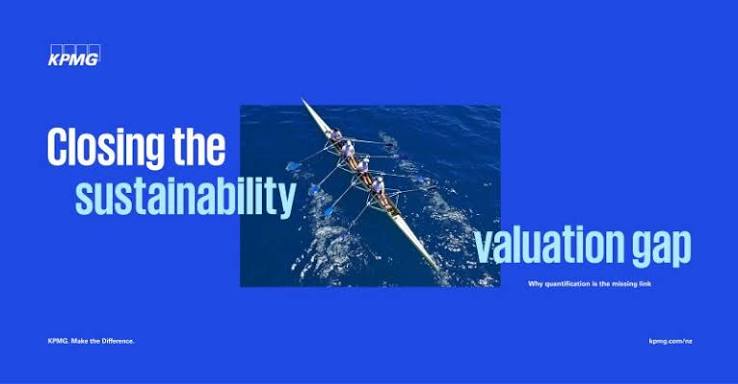
Sustainability has become a core business priority for companies worldwide, with half of organizations now embedding it into their corporate strategies. Yet only 19% have developed robust approaches to measure its financial impact, highlighting a significant gap between sustainability ambition and value creation, according to the latest report by KPMG, ” Closing the Sustainability Valuation Gap.”
Based on a survey of 2,024 executives across 19 countries, territories and jurisdictions in the Americas, EMEA and Asia-Pacific, the report finds that while sustainability is increasingly shaping corporate decision-making, most organizations still struggle to translate environmental and social performance into measurable financial outcomes.
The survey found that 72% of executives have a detailed understanding of their company’s sustainability strategy, metrics and performance—or are at least familiar with its key aspects.
Meanwhile, 60% said sustainability-related risks and opportunities are already incorporated into financial planning, reflecting growing recognition that climate and broader ESG issues are becoming material business risks.
Half of respondents said sustainability is now an integral part of their corporate strategy, while 40% reported integrating sustainability into innovation and product development.
Despite this progress, only 19% said their organizations use robust quantification methods to assess how sustainability affects financial performance, operational efficiency and innovation.
According to KPMG, this disconnect limits companies’ ability to prioritize investments, demonstrate returns to investors and fully integrate sustainability into business valuation and capital allocation.
KPMG describes the shortfall as a “sustainability valuation gap”—the difference between companies’ growing sustainability ambitions and their ability to measure the financial value those initiatives create.
Without credible financial metrics, many sustainability investments risk being viewed primarily as compliance costs rather than drivers of long-term growth, resilience and competitive advantage.
Simon Weaver, Global Head of Sustainability Advisory at KPMG International, said organizations increasingly recognize sustainability as a strategic issue, but understanding alone is no longer sufficient.
He said companies now need robust methodologies capable of translating sustainability performance into financial outcomes that can support investment decisions and long-term value creation.
The report indicates that some industries are moving faster than others in integrating sustainability into financial decision-making.
Banking and capital markets lead globally, with 33% of organizations using advanced valuation approaches, followed by energy and natural resources at 31%, and the automotive sector at 27%—all well above the global average of 19%.
According to KPMG, these sectors face more immediate sustainability-related financial risks and opportunities, accelerating the adoption of more sophisticated measurement frameworks.
KPMG argues that the next stage of corporate sustainability will be defined not by broader commitments or additional reporting, but by companies’ ability to connect sustainability performance with financial value.
The firm recommends embedding sustainability into capital allocation, financial planning and enterprise valuation, while strengthening collaboration between finance and sustainability teams and adopting standardized methods to quantify business impacts.
Julie Vasadi, Global Lead for Sustainability Deals & Value at KPMG International, said companies that successfully measure sustainability’s financial contribution will be better positioned to strengthen competitiveness, attract investment and create long-term enterprise value as stakeholder expectations continue to rise.
JPMorganChase has pledged approximately $3.5 million to organizations across Greater Boston to expand access to ...
L&G and NTR have secured cornerstone commitments from four returning investors for their second joint ...
French investment firm Hy24 has signed an agreement with EDF Pulse Ventures to acquire Hynamics, ...

Leave a comment