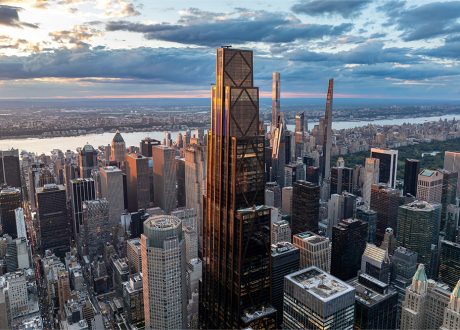
JPMorganChase pledges $3.5mln to boost jobs, small businesses in Boston
JPMorganChase has pledged approximately $3.5 million to organizations across Greater Boston to expand access to ...
Samsung Electronics has released its 2026 Sustainability Report, detailing progress on its environmental, social and governance (ESG) commitments, with water stewardship and AI-driven energy efficiency emerging as key milestones.
Under its New Environmental Strategy announced in 2022, Samsung continues to pursue net zero Scope 1 and 2 emissions, expand resource circularity and tackle environmental challenges through technological innovation.
As of the end of 2025, the company’s Device eXperience (DX) Division had transitioned 94.8% of its total energy consumption to renewable energy as it works toward achieving net zero Scope 1 and 2 emissions by 2030. The division also reduced power consumption by an average of 34.4% compared with 2019 by applying high-efficiency energy technologies across its representative product models.
Samsung also reported progress in resource circularity, with recycled plastic accounting for 33.7% of plastic components across all DX products. All global manufacturing sites earned UL Solutions’ highest Zero Waste to Landfill validation rating.
The DX Division achieved a water replenishment rate of 67.2% in 2025, advancing its goal of replenishing 100% of its global water consumption by 2030.
Samsung’s Device Solutions (DS) Division continued efforts to achieve net zero Scope 1 and 2 emissions by 2050 by introducing three additional regenerative catalytic systems and improving equipment energy efficiency.
The division also advanced low-power technologies that enabled the commercialization of more energy-efficient products, including HBM4 and PM1763. By 2030, Samsung plans to improve the energy efficiency of its HBM and server SSD products by 2.5 times and four times, respectively, to provide customers with optimized AI infrastructure solutions.
The semiconductor business also adopted a Water Positive approach aimed at replenishing more water than it consumes, restoring approximately 240,000 tonnes of water resources.
Samsung said it continues to strengthen workplace safety, targeting zero serious accidents and the highest global level of lost time injury rate by 2030.
The company expanded third-party sustainability audits to 122 first-tier suppliers and 39 second-tier suppliers, while launching a Supply Chain Sustainability Committee in late 2025 to address labor rights, environmental management and occupational safety across its supply chain.
Through its corporate citizenship programs, Samsung’s Software·AI Academy for Youth (SSAFY) trained approximately 2,000 young software professionals. Samsung Hope Stepping Stone also opened a new center in Incheon in 2025, bringing the total to 16 centers supporting 15,092 people seeking housing stability and greater independence.
Samsung said the 2026 Sustainability Report aligns with global disclosure standards and has been integrated with the company’s Sustainability website to improve accessibility.
JPMorganChase has pledged approximately $3.5 million to organizations across Greater Boston to expand access to ...
L&G and NTR have secured cornerstone commitments from four returning investors for their second joint ...
French investment firm Hy24 has signed an agreement with EDF Pulse Ventures to acquire Hynamics, ...
Leave a comment