
Meta backs MacroCycle plant targeting 5,000 tons of recycled plastic, 80% lower emissions
Meta has signed a three-year deal with US plastics recycling startup MacroCycle to support development ...
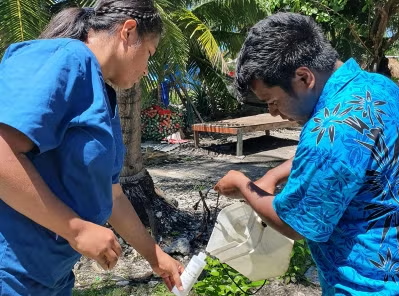
The United Nations Environment Program (UNEP) and the Global Environment Facility (GEF) have launched a $23.5 million Global Chemicals Monitoring Program (GCMP), a new initiative aimed at strengthening the global tracking of toxic pollutants and helping countries meet commitments under the Stockholm Convention on Persistent Organic Pollutants (POPs) and the Minamata Convention on Mercury.
Backed by an additional $50 million in co-financing, the program seeks to improve scientific understanding of chemical pollution, strengthen monitoring capacity in developing countries, and support evidence-based environmental policymaking.
The GCMP consists of six projects, including a global coordination component and five regional initiatives covering Africa, Asia, Pacific Islands, Latin America, and the Caribbean.
Together, the projects will generate scientific data on POPs and mercury, improve information-sharing, strengthen international cooperation, and support long-term environmental monitoring efforts.
The program aims to provide countries with reliable data to measure progress toward international commitments while improving accountability for global environmental goals.
Persistent Organic Pollutants are toxic synthetic chemicals that can remain in the environment for long periods, accumulate in food chains, and travel across borders, posing risks to human health and ecosystems.
The World Health Organization classifies mercury and several POPs among the chemicals of greatest public health concern due to their harmful effects on people and the environment.
By improving global monitoring of these substances, the programme is expected to enhance understanding of chemical exposure through air, water, and food, particularly among vulnerable populations, including infants exposed through contaminated breast milk.
The new initiative builds on the Global Monitoring Plan for POPs, a GEF-supported effort that has tracked environmental concentrations of hazardous chemicals since 2009.
Data collected under the previous program demonstrated declining concentrations of several legacy POPs in many regions, highlighting the effectiveness of international action. However, monitoring has also identified increasing trends for some newly listed pollutants, underscoring the need for continued surveillance and policy intervention.
“The GCMP builds on the previous Global Monitoring Plan for POPs and now expands to the Minamata Convention,” said Anil Sookdeo, Chemicals and Waste Coordinator at the GEF.
“It represents a major step towards strengthening the scientific foundation needed to protect human health and the environment from POPs and mercury, and the GEF is committed to supporting such joint efforts, investments, and collaborations.”
Jacqueline Alvarez, Chief of UNEP’s Chemicals and Health Branch, said robust scientific data remains essential for the effectiveness of multilateral environmental agreements.
“The success of multilateral environmental agreements depends on credible scientific evidence and strong international cooperation,” Alvarez said. “UNEP, with its partners, will support countries to strengthen POPs and mercury monitoring systems, improve data comparability, and build technical capacity to better understand and address broader chemical pollution challenges.”
A key objective of the program is to help countries develop technical expertise and institutional capacity needed to monitor hazardous chemicals and fulfill obligations under international environmental agreements.
“Globally coordinated monitoring is crucial for evaluating whether global commitments under multilateral agreements are effective in protecting the environment and human health,” said Kei Ohno Woodall, Senior Program Officer and Coordinator of the Global Monitoring Plan at the Basel, Rotterdam and Stockholm Convention Secretariat.
Eisaku Toda, Senior Program Officer and Coordinator of the Open-ended Scientific Group of the Minamata Convention Secretariat, said the initiative addresses a major data gap identified during the convention’s first effectiveness evaluation.
“This project is extremely timely since it will fill the gap in reliable, globally harmonized, and comparable monitoring data and support evidence-based policy decisions at national, regional, and global levels,” Toda said.
The program’s inception meeting brought together representatives from more than 50 participating countries, alongside scientific experts, regional implementing agencies, and funding partners.
Discussions focused on governance, implementation methodologies, stakeholder engagement, gender integration, communications, and knowledge-sharing strategies as participating countries begin rolling out the program across regions.
By strengthening global monitoring of mercury and persistent organic pollutants, UNEP and GEF aim to provide policymakers with the scientific evidence needed to reduce chemical pollution, protect vulnerable communities, and improve environmental and public health outcomes worldwide.
Meta has signed a three-year deal with US plastics recycling startup MacroCycle to support development ...
Catalyst Mobility, formerly CALSTART, and Smart Freight Center announced that a coalition of major cargo-owning ...
The REEFS Business Incubator, Egypt’s first business incubator dedicated to startups and SMEs working to ...


Leave a comment