
Hillebrand Gori offers 85% freight emissions cuts with GoGreen Plus
Hillebrand Gori, a DHL company and beverage logistics provider, has launched two transport decarbonization solutions, ...
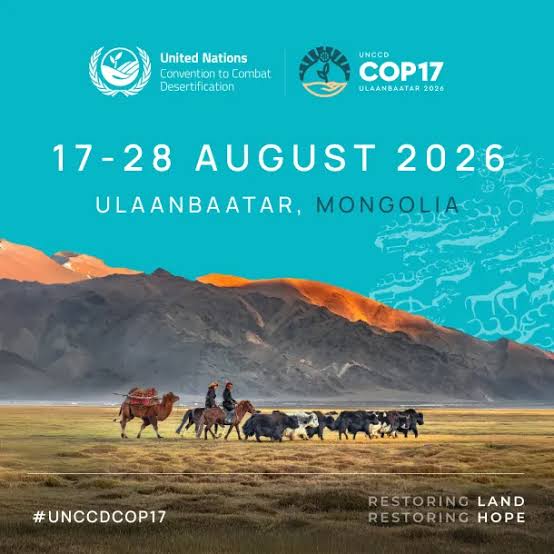
Governments, development banks, funds and businesses meeting at UNCCD COP17 have announced $1.3 billion in new and pipeline finance for land restoration and drought resilience across 23 countries on five continents.
Of the total, $644.5 million is identified as new finance, including $216.4 million already confirmed and moving toward implementation.
Mongolia announced a package of measures to channel more domestic finance into land restoration, including sustainable finance principles, a national green taxonomy and a 10% green lending target by 2030.
The country also launched the first national Business4Land (B4L) Hub, designed to connect businesses, financial institutions and investment opportunities around land restoration. Russia followed with its own hub, while Luxembourg moved to establish a Business4Land Foundation.
A major focus of the new financing is rangelands, which cover more than half of the world’s land and support the livelihoods of around 2 billion people, including some 500 million pastoralists.
The Rangelands Flagship Initiative, launched at COP17, has a portfolio valued at $1.2 billion across 45 projects, making it the largest single mobilization for rangelands in UNCCD history.
The economic case is also significant: rangelands generate an estimated $21 trillion-$47 trillion in annual benefits, while restoration can return $4-$6 for every dollar invested.
Representatives of major development banks and climate funds called for land, soil health and drought resilience to become more visible and trackable within existing nature-finance categories.
Participants backed greater use of guarantees, first-loss capital, index-based insurance and project-preparation facilities to attract private investment and reduce early-stage risks.
The African Development Bank also committed $100 million to the Zambezi River Basin program, covering eight countries, alongside the Southern Africa Great Green Wall Accelerator.
Private-sector finance currently accounts for only about 6% of global investment in land restoration, highlighting the need for more bankable projects and stronger investment frameworks.
“Business does not lack appetite for resilient supply chains, secure water and productive soil – it lacks bankable projects, credible data and a fair share of the early risk,” said Peter Bakker, President and CEO of the World Business Council for Sustainable Development.
UNCCD estimates that $355 billion annually is needed through 2030 to meet global land restoration commitments, compared with current investment of $77 billion, leaving a $278 billion annual gap.
“Land is not simply an environmental issue — it is economic infrastructure,” said Yasmine Fouad, Executive Secretary of the UNCCD, stressing that the focus must now shift from identifying the financing gap to building pathways that turn investment into implementation.
Hillebrand Gori, a DHL company and beverage logistics provider, has launched two transport decarbonization solutions, ...
The Institute of Sustainability and Environmental Professionals (ISEP) has opened applications for two new professional ...
Around 60% of global investors expect to increase allocations to investments that actively combat climate ...

Leave a comment