
Hillebrand Gori offers 85% freight emissions cuts with GoGreen Plus
Hillebrand Gori, a DHL company and beverage logistics provider, has launched two transport decarbonization solutions, ...
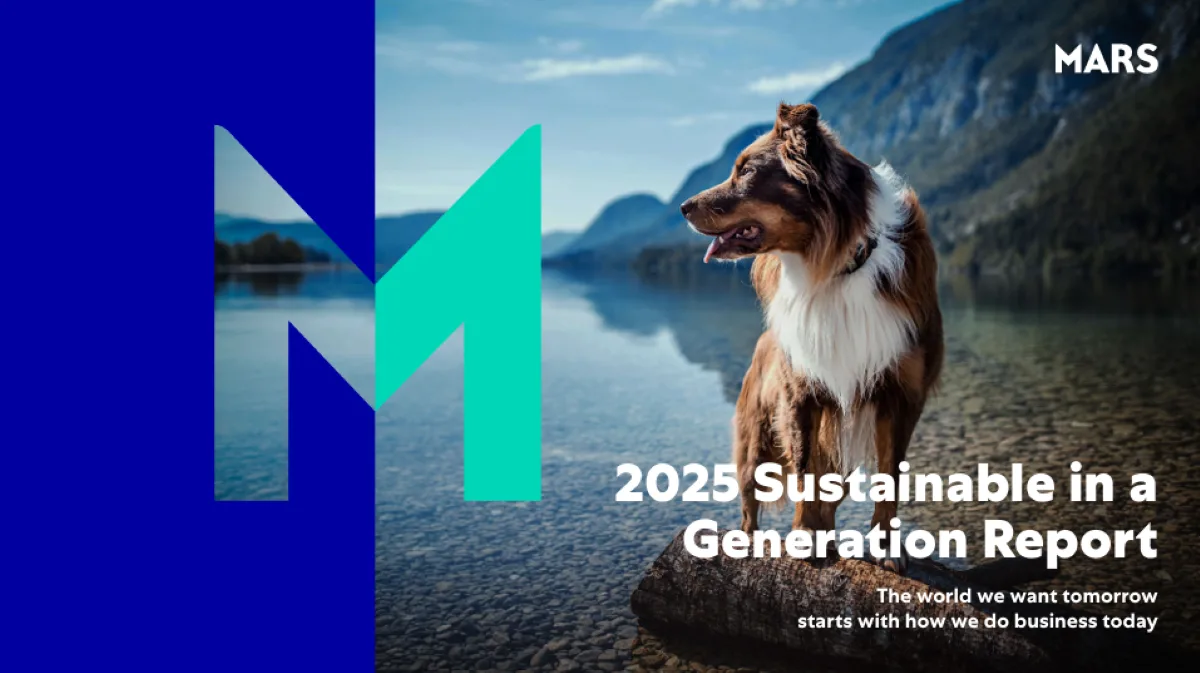
Mars has achieved a major clean energy milestone, with all of its US operations—including factories, offices, veterinary hospitals, and diagnostic labs—now powered by 100% renewable electricity.
The company also reported a 6.4% reduction in greenhouse gas (GHG) emissions across its full value chain in 2025, its largest annual decline to date, bringing cumulative absolute emissions reductions to 16.9% compared with a 2015 baseline while growing the business by approximately 75%.
The progress, detailed in the company’s 2025 Sustainable in a Generation Report, also helped Mars deliver its Science Based Target for operational emissions, reducing Scope 1 and Scope 2 GHG emissions by 42.6% versus 2015 levels.
The company said the transition to 100% renewable electricity across its US operations marks a significant step in its broader decarbonization strategy.
Poul Weihrauch, Mars CEO, said “Reaching a milestone of 100% renewable electricity in our direct US operations – from factories to offices, from veterinary hospitals to diagnostic labs – it’s something to celebrate and be proud of. Building a resilient business includes access to clean and accessible energy, farmers that are not at the mercy of extreme weather events and communities that thrive across our full value chain. Our priority is to continue our efforts to generate good jobs, support our Associates and communities, and continuing to work towards a more resilient and sustainable future for all.”
Mars said its Renewables Acceleration (RAcc) program, launched in 2025, is designed to extend renewable electricity adoption beyond its own operations and into its supply chain. By 2030, the initiative could reduce emissions by around 3 million metric tons, equivalent to roughly 10% of the company’s 2025 carbon footprint.
The company’s latest RAcc agreement with Enel North America will support three new solar projects in Texas, expected to generate approximately 1.80 TWh of renewable electricity annually for Mars and its suppliers. Mars also continues to operate wind and solar projects that generate Renewable Energy Certificates equivalent to the electricity consumed across its direct US operations.
Mars continued to scale climate-smart agriculture programs in 2025, growing its portfolio to around 77 projects across 26 countries and 12 crops.
Among the initiatives, the company invested approximately $5.2 million over five years through its Protect the Peanut program to develop drought- and disease-resistant peanut varieties and support farmers facing increasingly unpredictable weather conditions.
Through its Raising Rice Right initiative, Mars is investing $20 million between 2020 and 2030 to expand climate-smart rice farming practices, strengthen farmer resilience, and support industry collaboration.
The company also partnered with PepsiCo and ADM to launch a regenerative agriculture program in Poland, helping 24 farmers adopt more sustainable practices across more than 5,450 hectares. Mars is supporting regenerative wheat production across 3,450 hectares for brands including WHISKAS® and PEDIGREE®, with a focus on improving soil health, enhancing biodiversity, and strengthening climate resilience.
Alastair Child, Mars Chief Sustainability Officer, said: “The hard work of our Associates and partners in 2025 demonstrates how sustainability sits at the center of how we plan, invest and operate. Delivering impact at scale requires collaboration across industries, suppliers, governments, NGOs and local communities, and we remain focused on turning ambition into measurable progress across our value chain.”
Mars also announced significant investments across its business in 2025 aimed at strengthening manufacturing capacity while supporting long-term decarbonization efforts.
The company plans to invest an estimated $2 billion in US-based manufacturing and €1 billion across its European Union operations by the end of 2026. It also launched the Mars Sustainability Investment Fund with a total capital commitment of up to $250 million and established the Mars Impact Fund to complement its sustainability and philanthropic initiatives.
Hillebrand Gori, a DHL company and beverage logistics provider, has launched two transport decarbonization solutions, ...
The Institute of Sustainability and Environmental Professionals (ISEP) has opened applications for two new professional ...
Around 60% of global investors expect to increase allocations to investments that actively combat climate ...


Leave a comment