Vodafone advances network decarbonization, climate resilience
Vodafone is stepping up efforts to decarbonise its networks, strengthen climate resilience and reduce electronic ...
Vodafone is stepping up efforts to decarbonise its networks, strengthen climate resilience and reduce electronic waste, with initiatives spanning its operations in Europe and Africa.
The company’s climate strategy combines emissions reduction with measures to help communities withstand climate-related disruptions and make digital infrastructure more resilient. Its efforts cover network energy efficiency, renewable power, climate adaptation and the circular use of electronic devices.
Connectivity as lifeline:
Floods, storms, wildfires and extreme heat can disrupt electricity, transport and public services, making reliable connectivity particularly critical during emergencies.
Vodafone’s report, Connectivity as a Lifeline: Enabling Climate Resilience in a Disrupted World, examines how mobile networks and digital services support communities throughout the resilience cycle, from early warnings and preparedness to emergency response and recovery.
Drawing on experience across Europe and Africa, the report highlights how connectivity helped restore services following floods and storms, while digital payments and vouchers supported affected communities.
Cutting network emissions:
Vodafone is working to reduce the environmental footprint of its operations, value chain, products and services, as part of the telecoms industry’s drive towards net zero by 2040.
The company is targeting net zero emissions from its own operations in Europe by 2028 and in Africa by 2035. Its Scope 1, 2 and 3 greenhouse gas emissions have already declined 31% since 2020.
Fossil-fuel energy used to power networks remains the largest source of Vodafone’s operational emissions. The company is therefore focusing on improving energy efficiency, modernising infrastructure, reducing electricity consumption and optimising network configurations.
Its climate transition plan combines emissions reduction with measures to manage climate-related risks and strengthen network resilience. These include energy-efficient radio equipment, smart power-saving features and AI-based energy-management tools.
Decarbonizing Africa’s digital infrastructure:
The challenge is particularly significant in Africa, where growing demand for digital services coincides with unreliable electricity supplies, carbon-intensive grids and limited transmission infrastructure.
Vodacom’s April report, Decarbonizing Africa’s ICT Sector, examines barriers to reducing emissions across the sector, including mobile operators’ continued reliance on diesel generators to maintain services, particularly in rural and off-grid areas.
The report identifies electricity-market reform, renewable energy procurement, mini-grids, onsite generation and greater energy efficiency as key elements of the transition.
It also highlights financing mechanisms such as independent power producers, power purchase agreements, development finance institutions and blended finance to help overcome investment barriers.
Expanding access to cleaner, distributed energy sources would help reduce emissions while improving network reliability and limiting dependence on diesel generators and weak electricity grids.
Giving electronic devices second life:
Vodafone is also highlighting its circular-economy efforts in Türkiye, where its Dünya İçin Lazım (Needed for the Planet) programme has collected 40 tons of electronic waste for recycling.
Implemented with WWF-Türkiye, Habitat Derneği and licensed recycling partner Ouno Green Campus, the initiative channels value recovered from electronic waste into environmental education, reaching more than 87,000 people.
The programme aims to reduce electronic waste, recover valuable materials and limit demand for newly mined resources, while raising awareness of responsible consumption.
From commitments to action:
Vodafone’s initiatives highlight the links between climate resilience, emissions reduction and resource efficiency. As climate pressures intensify, networks need to become both more resilient and less carbon-intensive, while the technology powering digital growth must be used more efficiently.
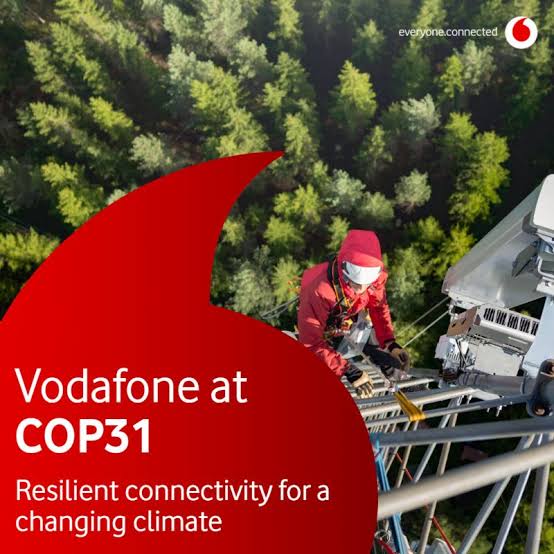
These priorities also featured in the company’s engagement at COP31 in Antalya, Türkiye, where climate resilience, decarbonisation and circularity were among the issues discussed.
Achieving these goals requires collaboration among telecom operators, energy providers, governments, emergency services, financiers, suppliers, humanitarian organizations and local communities.
Vodafone is stepping up efforts to decarbonise its networks, strengthen climate resilience and reduce electronic ...
Siemens, in partnership with Australian solution partner Mescada, is providing digital engineering technology to help ...
The UAE’s Commercial Bank International (CBI) has partnered with Boomitra to give customers access to ...

Leave a comment