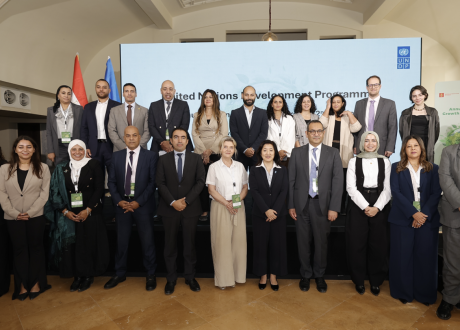
UNDP Egypt Conf. pushes green, digital growth for SMEs, Youth
The United Nations Development Program (UNDP) in Egypt convened its second Annual Green Growth Conference ...
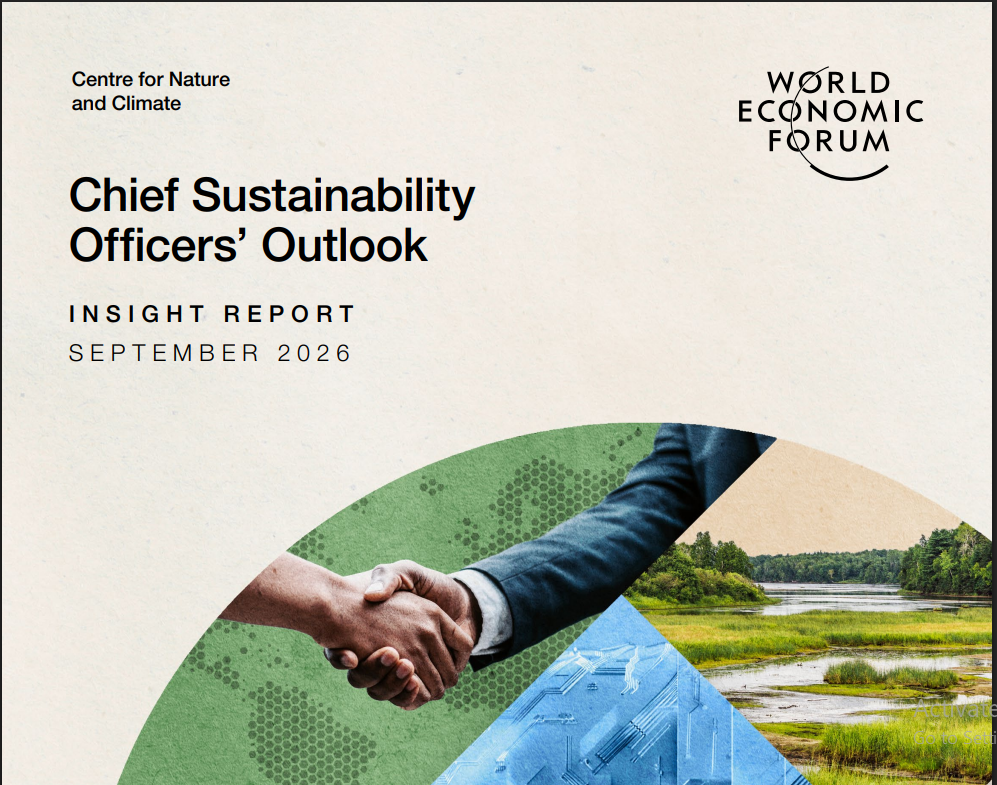
Overall, 63% of chief sustainability officers (CSOs) surveyed expect global sustainability progress to hold steady or accelerate over the next year, despite a challenging geopolitical and macroeconomic environment, according to the Chief Sustainability Officers’ Outlook September 2026.
At the organizational level, three-quarters of respondents also expect companies’ sustainability transition-related investments to remain unchanged or accelerate over the next 12 months.
However, 78% expect current geopolitical and macroeconomic conditions to weigh on sustainability progress, citing conflict, uneven policy signals and weaker multilateralism.
Sustainability shifts toward value creation:
Within businesses, sustainability is increasingly being viewed through a value-creation lens, although compliance remains a primary focus.
Around two-thirds of CSOs said C-suite leaders still view sustainability mainly through a compliance lens, while there are signs that its role in creating business value is gaining recognition.
The key challenge will be embedding sustainability considerations into operational decision-making as short-term performance pressures intensify.
Over the next three years, commercial, technological and resilience imperatives are expected to drive more of the sustainability transition than multilateral coordination or political alignment.
A clear business case for sustainability measures is identified as the strongest accelerator by 64% of respondents, followed by cheaper and more widely available technologies at 56%.
At the same time, progress is expected to diverge across sectors, markets and geographies, with 68% citing policy uncertainty, 61% short-term performance pressures and 54% deepening international tensions as key challenges.
Emerging markets are also expected to play a growing leadership role in the transition.
AI highlights sustainability trade-offs:
Artificial intelligence (AI) illustrates the practical choices organizations face as sustainability and digital transformation increasingly converge.
Nearly three-quarters of CSOs expect AI and other digital technologies to support sustainability goals over the next year, particularly through risk modelling, process and resource efficiency, and measurement and reporting.
However, 77% identify the energy and resource intensity of AI infrastructure as its most significant negative impact, highlighting the trade-offs organizations must manage as AI deployment accelerates.
Adaptation gains greater focus:
As climate- and nature-related physical impacts become more frequent and intense across operations, infrastructure and value chains, adaptation is expected to become a greater global priority.
Some 85% of respondents expect adaptation to receive greater global focus, while 77% agree that private-sector investment will be decisive.
Yet 62% cite uncertain cost-benefit assessments as a key constraint, indicating that private capital will not scale automatically.
The report said adaptation will require investable structures, risk-sharing mechanisms and clearer revenue or repayment models that can turn avoided disruption into credible business cases.
Overall, the findings point to a sustainability transition increasingly embedded in commercial, financial and economic decision-making.
The United Nations Development Program (UNDP) in Egypt convened its second Annual Green Growth Conference ...
JPMorganChase has pledged approximately $3.5 million to organizations across Greater Boston to expand access to ...
L&G and NTR have secured cornerstone commitments from four returning investors for their second joint ...
Leave a comment