
Meta backs MacroCycle plant targeting 5,000 tons of recycled plastic, 80% lower emissions
Meta has signed a three-year deal with US plastics recycling startup MacroCycle to support development ...
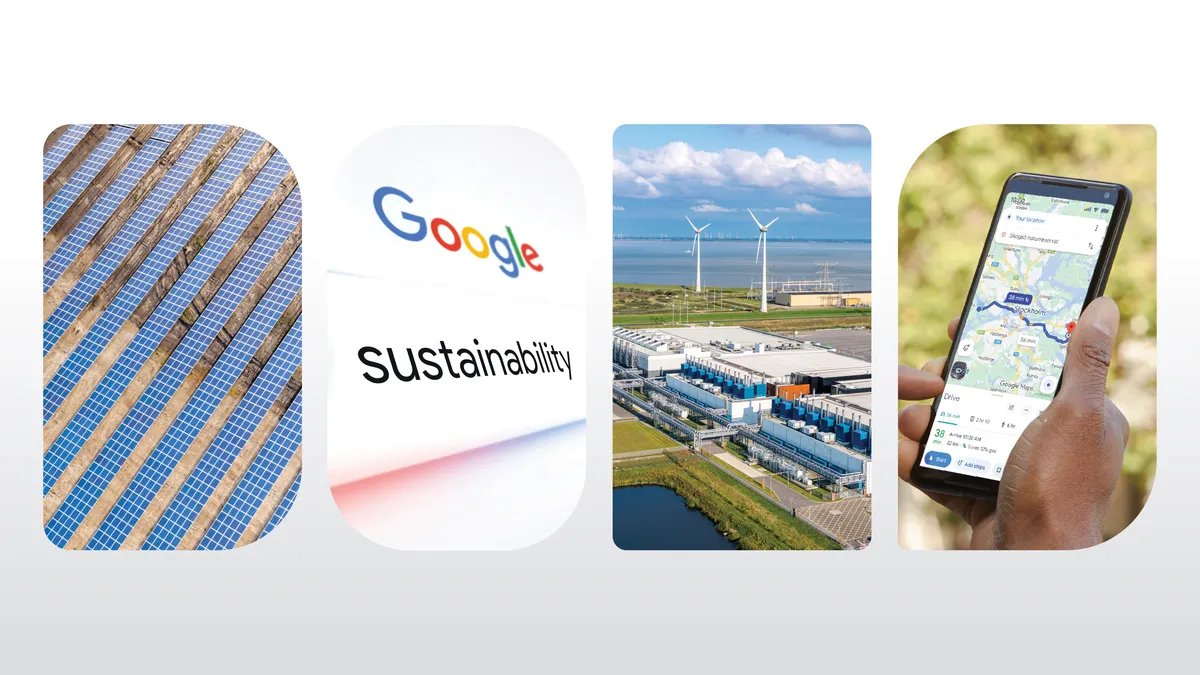
Google signed agreements for more than 12 gigawatts (GW) of net-new clean energy in 2025—its largest annual procurement to date—while avoiding more than 58 million metric tons of CO₂e, according to its latest Environmental Report.
The company said the new projects are expected to generate enough renewable electricity to power a country the size of Greece for a year once operational, underscoring its efforts to balance rapid AI expansion with long-term climate goals.
Despite a 37% increase in electricity demand driven by AI infrastructure, Google reduced its operational greenhouse gas emissions by 2% in 2025 and matched 100% of its electricity consumption with renewable energy purchases for the ninth consecutive year.
Since 2010, Google has signed more than 240 clean energy agreements totaling nearly 35 GW, reinforcing its position among the world’s largest corporate purchasers of renewable electricity.
The company said advances in hardware, software, compute efficiency and clean energy procurement helped avoid more than 58 million metric tons of CO₂e in 2025 alone. Without these measures, its ambition-based carbon footprint would have been five times larger.
Google is also investing in next-generation energy technologies, including nuclear, enhanced geothermal and fusion, while continuing to improve the efficiency of its data centers.
Beyond its own operations, Google estimated that its AI-powered products enabled customers and partners to reduce approximately 41 million metric tons of CO₂e in 2025—around three times the company’s own annual emissions.
The company cited tools such as Google Earth for renewable energy planning, Nest thermostats for home energy efficiency, Google Maps’ fuel-efficient routing, and AI systems that improve forecasting of wildfires, floods and other natural disasters.
Google also replenished approximately 7.7 billion gallons of water in 2025, equivalent to about 78% of its freshwater consumption, as it moves toward its 2030 water stewardship target.
Google acknowledged that while operational emissions declined, supply chain emissions rose 25% in 2025 as it accelerated investment in AI infrastructure, particularly in regions where electricity grids remain heavily dependent on fossil fuels.
“While the path to achieving our climate ambitions will not be linear—given our AI infrastructure buildout is currently accelerating faster than the grid is decarbonizing—we remain focused on scaling abundant and affordable clean power globally and progressing technological innovations that drive down emissions across our operations and the broader industry,” the company said.
Meta has signed a three-year deal with US plastics recycling startup MacroCycle to support development ...
Catalyst Mobility, formerly CALSTART, and Smart Freight Center announced that a coalition of major cargo-owning ...
The REEFS Business Incubator, Egypt’s first business incubator dedicated to startups and SMEs working to ...

Leave a comment