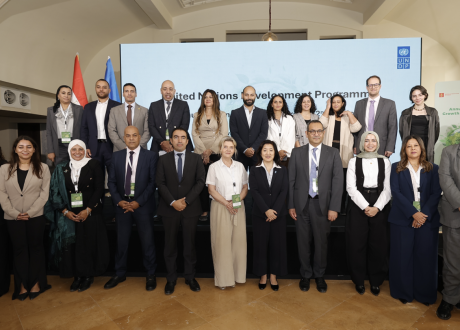
UNDP Egypt Conf. pushes green, digital growth for SMEs, Youth
The United Nations Development Program (UNDP) in Egypt convened its second Annual Green Growth Conference ...

The United Nations Environment Program (UNEP) and the Secretariat of the World Health Organization Framework Convention on Tobacco Control (WHO FCTC) will launch a social media campaign to raise awareness about the environmental and health impacts of microplastics in cigarette butts, the most discarded waste item worldwide.
The partnership is facilitated through UNEP’s Clean Seas campaign, a global coalition comprised of 63 countries devoted to ending marine plastic pollution.
It combines the two agencies’ respective experience on the health and policy dimensions of tobacco products, and research and advocacy on plastic pollution.
Globally, more than six trillion cigarettes are produced annually, each containing filters, or butts, that are mainly composed of microplastics known as cellulose acetate fibers.
However, cigarette butts that are not properly disposed of get broken down by factors such as sunlight and moisture, thus releasing microplastics, heavy metals and many other chemicals which impact ecosystems’ health and services.
Cigarette butts account for more than 766 million kilograms of toxic trash each year. They are also the most common plastic litter on beaches, making marine ecosystems more susceptible to microplastic leakages.
When ingested, the hazardous chemicals in microplastics cause long-term mortality in marine life, including birds, fish, mammals, plants and reptiles.
These microplastics also enter the food chain and are associated with serious human health impacts, which can include changes to genetics, brain development, respiration rates and more.
The social media campaign will aim to engage influencers, as well as UNEP’s Goodwill Ambassadors and Young Champions of the Earth.
It will also include a political advocacy angle by highlighting a recent European Union directive that requires all tobacco products with plastic filters to be labelled clearly. The goal is to encourage the public to advocate for similar changes globally.
“The Secretariat of the WHO FCTC has the technical expertise of the impact of tobacco products on not just human health but also on environment,” said Atif Butt, UNEP’s Chief of Public Advocacy.
“By joining UNEP’s and the Secretariat of the WHO FCTC’s expertise together under the Clean Seas activation on microplastics, we aim to highlight how our health is intrinsically linked to that of our planet.”
The United Nations Development Program (UNDP) in Egypt convened its second Annual Green Growth Conference ...
JPMorganChase has pledged approximately $3.5 million to organizations across Greater Boston to expand access to ...
L&G and NTR have secured cornerstone commitments from four returning investors for their second joint ...

Leave a comment