
HKEX launches green equity program for listed companies
Hong Kong Exchanges and Clearing Limited (HKEX) has launched a voluntary designation program to help ...
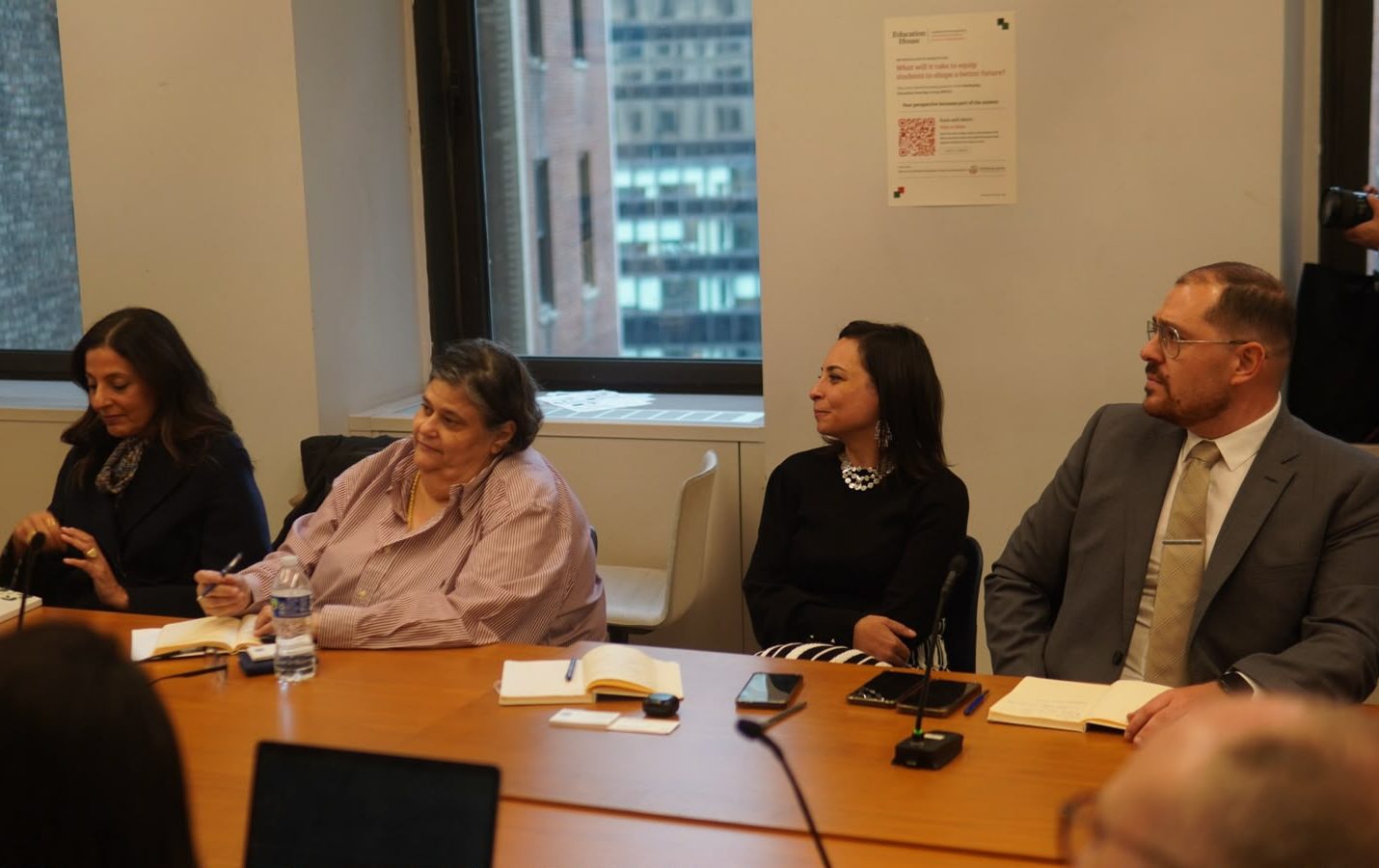
Sawiris Foundation marked its first participation in United Nations General Assembly (UNGA81) Week in New York by joining three high-level sessions on local partnerships, catalytic financing for education, and the role of philanthropy in shaping the future of artificial intelligence (AI) in global growth markets.
Drawing on 25 years of development experience in Egypt, the Foundation brought a locally grounded perspective to global discussions on how philanthropy can move beyond financing individual projects to testing solutions, generating evidence, taking early-stage risks, mobilizing funding and partnerships, and connecting global knowledge with local institutions.
The Foundation began its participation with “From Partnership to Platform,” organized in partnership with the Arab Foundations Forum, which explored how local philanthropic organizations can move beyond implementing or funding individual projects to building collaborative platforms that bring together funding, expertise, and knowledge to scale effective solutions.
Sawiris Foundation presented three opportunities for international collaboration; contributing to a national pooled fund managed without administrative fees, supporting the expansion of the Door of Hope “Bab Amal” Program to reach 100,000 families by 2030, and expanding the network of international partners and expertise supporting the approach.
The session also highlighted the importance of giving trusted local institutions a stronger role in setting priorities and directing resources, with localization extending beyond implementation to include local voice, decision-making, financing, and leadership.
The Foundation then participated in “Strengthening the Catalytic Role of Philanthropy in Education Finance,” held in collaboration with OECD netFWD at Education House.
The session examined the widening education financing gap and how philanthropic capital can move beyond traditional grant-making through approaches such as risk-taking, blended finance, and outcomes-based financing to mobilize additional resources for education.
Drawing on its experience in Egypt, Sawiris Foundation highlighted an approach that links financing decisions to a clear understanding of the problem, available evidence, results measurement, and continuous learning before scaling solutions.
The Foundation also highlighted its partnerships with philanthropic organizations, government entities, the private sector, and development institutions, stressing that additional funding must be accompanied by the ability to learn, adapt, and scale approaches that demonstrate results.
The Foundation concluded its participation with “The Role of Philanthropy in Shaping the Future of AI in Global Growth Markets,” held in collaboration with the MIT Kuo Sharper Center and DLA Piper.
The discussion focused on local agency and ownership in the age of AI, with Sawiris Foundation stressing that institutions in growth markets should have a meaningful role in shaping how technology is developed and used to address local needs and priorities, rather than simply adopting ready-made solutions.
The Foundation also highlighted the importance of strengthening local capabilities in talent, data, digital infrastructure, and technology entrepreneurship, while using global expertise in ways that reinforce local ownership rather than dependence on external models and platforms.
The three sessions provided an opportunity for a two-way exchange of knowledge and experience, with Sawiris Foundation bringing 25 years of experience in Egypt in program design, partnerships, evidence, and learning to international discussions while engaging with global experiences and partnerships that can be adapted to the Egyptian context.
Laila Hosny, Executive Director of Sawiris Foundation, said development financing is facing increasing pressure as needs grow while some traditional funding sources decline.
“The true value of philanthropy lies in its ability to create space for innovation, take risks at an early stage, and build the evidence needed to inform better decisions on financing and scaling,” Hosny said. “We also believe that the most sustainable solutions are those developed with local communities and institutions, giving them a meaningful role in setting priorities and making decisions.”
The Foundation said its participation reflects its view that development knowledge should not flow only from the Global North to the Global South, noting that local experience from Egypt and the wider region can also contribute to global development discussions and practices.
The Foundation aims to use insights gained through international platforms to strengthen its work and partnerships in Egypt while bringing its local experience and development models into global discussions on the future of philanthropy and development finance.
The Foundation’s first UNGA participation comes as it marks its 25th anniversary. Over the past 25 years, it has worked in Egypt to address multidimensional poverty and expand opportunities for underserved individuals and communities through education, economic and social empowerment, and quality-of-life programs, alongside support for the cultural and artistic landscape.
Its work is grounded in evidence, continuous learning, and partnerships, enabling the Foundation to bring its local experience to international platforms while drawing on global knowledge and partnerships to advance Egypt’s development priorities.
Hong Kong Exchanges and Clearing Limited (HKEX) has launched a voluntary designation program to help ...
Abu Dhabi Future Energy Company (Masdar) increased clean electricity generation from its operating projects by ...
Citi has closed a $72 million, 3.5-year principal-protected Carbon Removal-Linked Note to finance Applied Carbon’s ...


Leave a comment