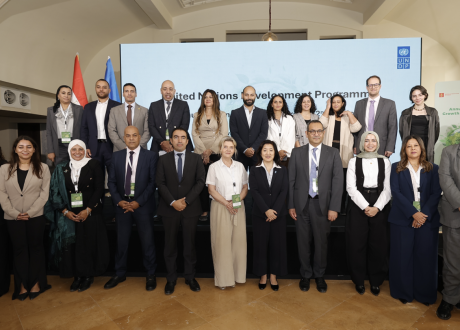
UNDP Egypt Conf. pushes green, digital growth for SMEs, Youth
The United Nations Development Program (UNDP) in Egypt convened its second Annual Green Growth Conference ...

As part of its mission to tackle plastic pollution in the marine environment, The Ocean Cleanup project plans to sell goods made from the waste it recovers to fund its ongoing operations, and has just unveiled its very first product. Each pair of Ocean Cleanup sunglasses are made with plastics hauled in from the Great Pacific Garbage Patch, and are designed to be easily recycled themselves once they reach the end of their life.
The waste it collected throughout that mission has now been sorted, washed and compounded into certified high-quality plastic, which was used to build sunglass frames. These are paired with polarized lenses and stainless steel hinges, with the parts designed to be easily disassembled and recycled again at the end of their life. The glasses also come with a case made from recycled components of the first trash-catching system, and a pouch made from recycled PET bottles.
Using proceeds from the sales of these sunglasses, The Ocean Cleanup plans to fund its forthcoming missions to clean plastic waste from the marine environment. The group estimates that each pair sold will enable it to clean up an area spanning 24 football fields from the garbage patch, and if it sells every pair made from this first batch of recovered plastic, it will be able to clean 500,000 football fields worth of plastic.
That sure does sound impressive but somewhere between 5 and 12 million metric tons of plastic flow into the ocean each year, with that rate expected to triple in the next two decades, which equates to a whole lot of sunglasses. The Ocean Cleanup team will of course be very aware of this, but as a manifestation of its efforts so far and an example of a “circular” economy for plastics, its new eco-friendly eyewear isn’t a bad place to start.
The United Nations Development Program (UNDP) in Egypt convened its second Annual Green Growth Conference ...
JPMorganChase has pledged approximately $3.5 million to organizations across Greater Boston to expand access to ...
L&G and NTR have secured cornerstone commitments from four returning investors for their second joint ...
Leave a comment