UNDP Egypt Conf. pushes green, digital growth for SMEs, Youth
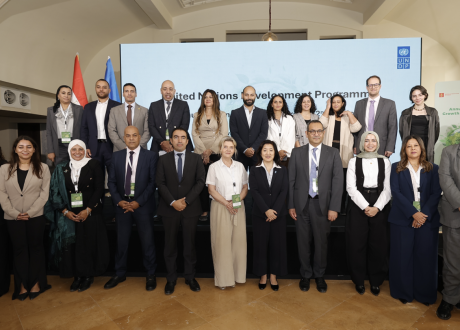
The United Nations Development Program (UNDP) in Egypt convened its second Annual Green Growth Conference ...

A new research co-led by Oxford University’s Wildlife Conservation Research Unit (WildCRU) has revealed alarming data about dwindling lion populations in Africa and estimated that the costs for protecting all the remaining African lions may be as high as $3 billion annually.
However, the vulnerability of different lion populations cannot be assessed simply through their size. For each population, the researchers identified ecological and socio-political factors that may influence their survival. Smaller lion populations or higher densities of people and livestock, for example, would contribute to higher ecological fragility, while higher levels of corruption or lower GDP per capita would contribute to greater socio-political fragility. These were then integrated into a single overall fragility index, and each lion population was compared relative to the others.
The combination of these two indices provided some interesting comparisons. For instance, both Sudan and Benin have a single known lion population with roughly the same number of lions. However, whilst Benin is relatively more stable and prosperous, Sudan is currently involved in a civil war with people fleeing in the millions. The war and instability undercut the ability of park rangers or others to help ensure the continuation of Sudan’s lions.
Professor Dickman said: ‘Some populations may ultimately have similar fragility scores, but they are driven by different threats. Thus, while on the surface, the lone lion populations in Sudan and Benin may appear similar, they likely require different levels of investment and perhaps even different types of intervention for conservation to succeed. Pouring money into conserving Sudan’s lions may be relatively ineffective unless the socio-political factors such as the civil war are dealt with first.’
The United Nations Development Program (UNDP) in Egypt convened its second Annual Green Growth Conference ...
JPMorganChase has pledged approximately $3.5 million to organizations across Greater Boston to expand access to ...
L&G and NTR have secured cornerstone commitments from four returning investors for their second joint ...

Leave a comment