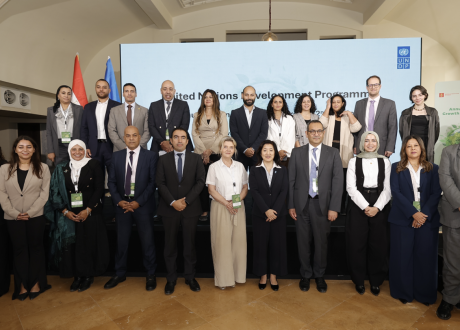
UNDP Egypt Conf. pushes green, digital growth for SMEs, Youth
The United Nations Development Program (UNDP) in Egypt convened its second Annual Green Growth Conference ...
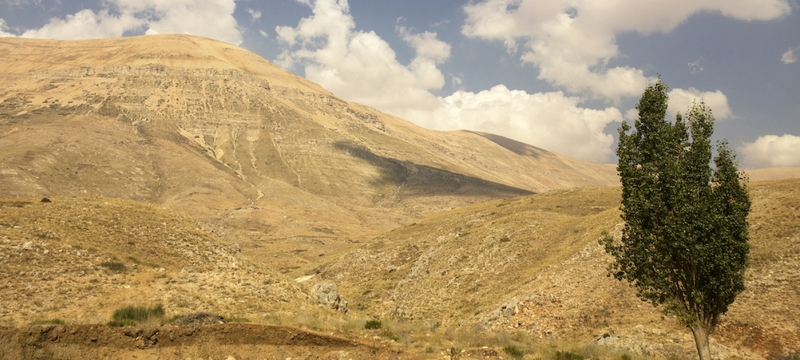
Lebanon’s innovative pilot project called “Shade for Life” has focused on planting clusters of up to 150 large trees, including oak, fig, and wild almond trees as well as forage species that support water infiltration and sustain long-term grazing.
The pilot project was launched in 2021 by the United Nations Environment Program (UNEP), in partnership with the Lebanon Reforestation Initiative in the villages of Mdoukha and Khirbet Rouha in Rashaya district in the Beqaa Valley.
The aim of the project is to restore the landscapes and ecosystems of semi-arid lands to not only improve and conserve this vital ecosystem but to also help shepherds and their livestock.
The Shade for Life project is funded under the UN Decade on Ecosystem Restoration led by UNEP and the Food and Agriculture Organization of the United Nations (FAO) to halt the degradation of ecosystems and enhance people’s livelihoods, counteract climate change, and stop the collapse of biodiversity.
One of the unique features of this project is that it does not hinder the productivity of the shepherds. Even during the planning phase, grazing areas remained accessible to herds, with 25-50 square meter patches planted, irrigated, and maintained by the shepherds themselves.
“This project adopted a participatory approach that engaged the shepherds, the local authorities and civil society organizations,” said Sami Dimassi, UNEP Representative and Regional Director for West Asia. “It not only brought shade back and restored pasture, but it also built the capacity of local communities and shepherds, engaging them to preserve the restored ecosystem.”
Raising livestock on the mountain ranges of the Beqaa Valley is a way of life that goes back to biblical times. It symbolizes the attachment of shepherds and locals to their land and culture.
Animal husbandry is also a vital economic sector in Lebanon, where herders sell everything from meat to goat cheese. But this millennia-old practice has faced many challenges in recent years, including land degradation, loss of biodiversity and vulnerability to climate change.
The United Nations Development Program (UNDP) in Egypt convened its second Annual Green Growth Conference ...
JPMorganChase has pledged approximately $3.5 million to organizations across Greater Boston to expand access to ...
L&G and NTR have secured cornerstone commitments from four returning investors for their second joint ...

Leave a comment