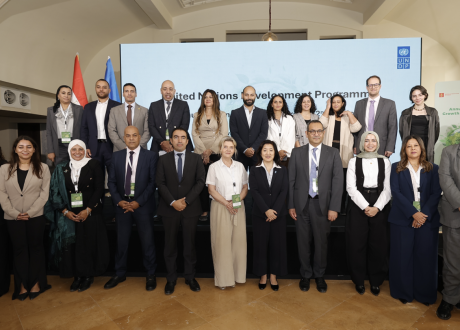
UNDP Egypt Conf. pushes green, digital growth for SMEs, Youth
The United Nations Development Program (UNDP) in Egypt convened its second Annual Green Growth Conference ...
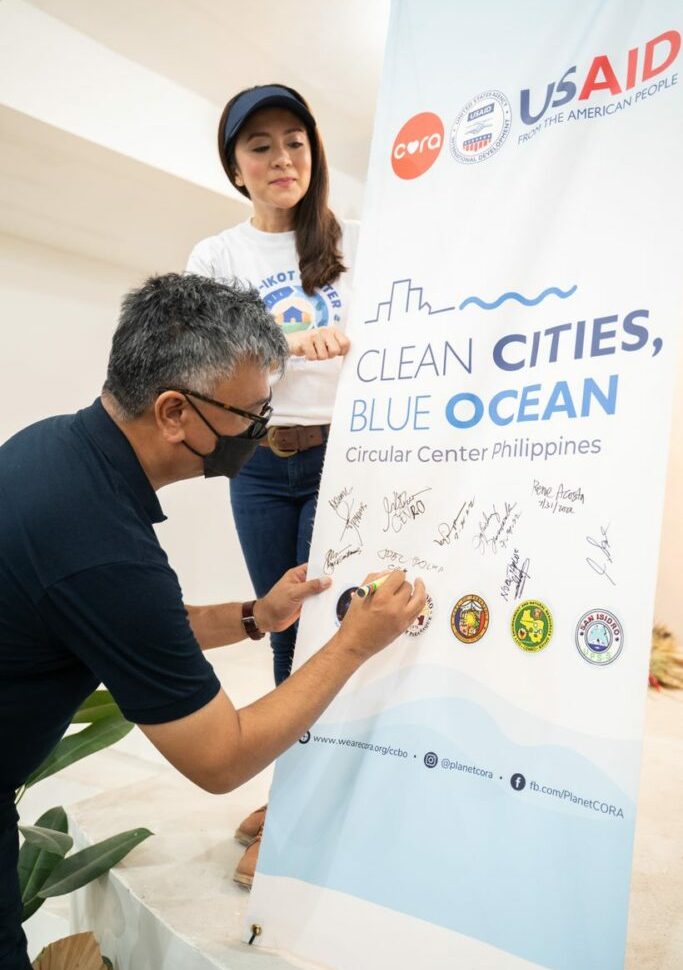
The US Agency for International Development (USAID), and Clean Cities, Blue Ocean (CCBO) program grantee Communities Organized for Resource Allocation (CORA) Inc. launched a plastic buying and exchange center to address ocean plastic pollution in Parañaque City.
The Eco-Ikot Center serves as an inclusive and replicable waste collection and recycling system to help communities prevent solid waste from ending up in landfills. It supports and strengthens local government systems and infrastructure while providing incentives for the community to adopt more sustainable behavior by trading in recyclables.
At the Eco-Ikot Center in Parañaque City, local residents will be able to exchange their clean, dry, and segregated recyclables for points that can be redeemed for various incentives like digital currency, rice, fresh vegetables, and other sustainable or reusable items.
The idea to establish an Eco-Ikot Center was spurred by the large volume of recyclable plastics that CORA volunteers regularly collect during clean-up drives along Manila Bay.
“This center will serve as a model for promoting ‘reduce, reuse, and recycle’ practices in local communities,” said USAID Philippines Acting Environment Office Director Dr. John Piggott. “Through our work together, we can make measurable progress in stemming the tide of ocean plastic pollution.”
“Partnerships, together with community-led actions, play a crucial part in achieving our global goals,” said CORA Philippines Founder and Executive Director Antoinette Taus. “USAID’s CCBO program has provided CORA with the necessary tools to empower communities with sustainable waste management solutions that benefit women, local citizens, and our shared environment.”
USAID’s CCBO program was launched in August 2019 as the Agency’s flagship program to respond to the ocean plastics pollution crisis. The five-year, Php 2.7 billion ($48 million) program works at the global level and in rapidly urbanizing countries like the Philippines to address ocean plastics directly at their source. By strengthening waste management systems and building circular economies, the CCBO program builds sustainable solutions that reduce ocean plastics while empowering vulnerable populations and mitigating pollution that affects human health and the climate.
The United Nations Development Program (UNDP) in Egypt convened its second Annual Green Growth Conference ...
JPMorganChase has pledged approximately $3.5 million to organizations across Greater Boston to expand access to ...
L&G and NTR have secured cornerstone commitments from four returning investors for their second joint ...

Leave a comment