
Amany Arafa: Sustainability starts at board level; ESG non-compliance carries higher costs
Amany Arafa, Board Member of the United Nations Global Compact Network Egypt (UNGCNE), said companies ...
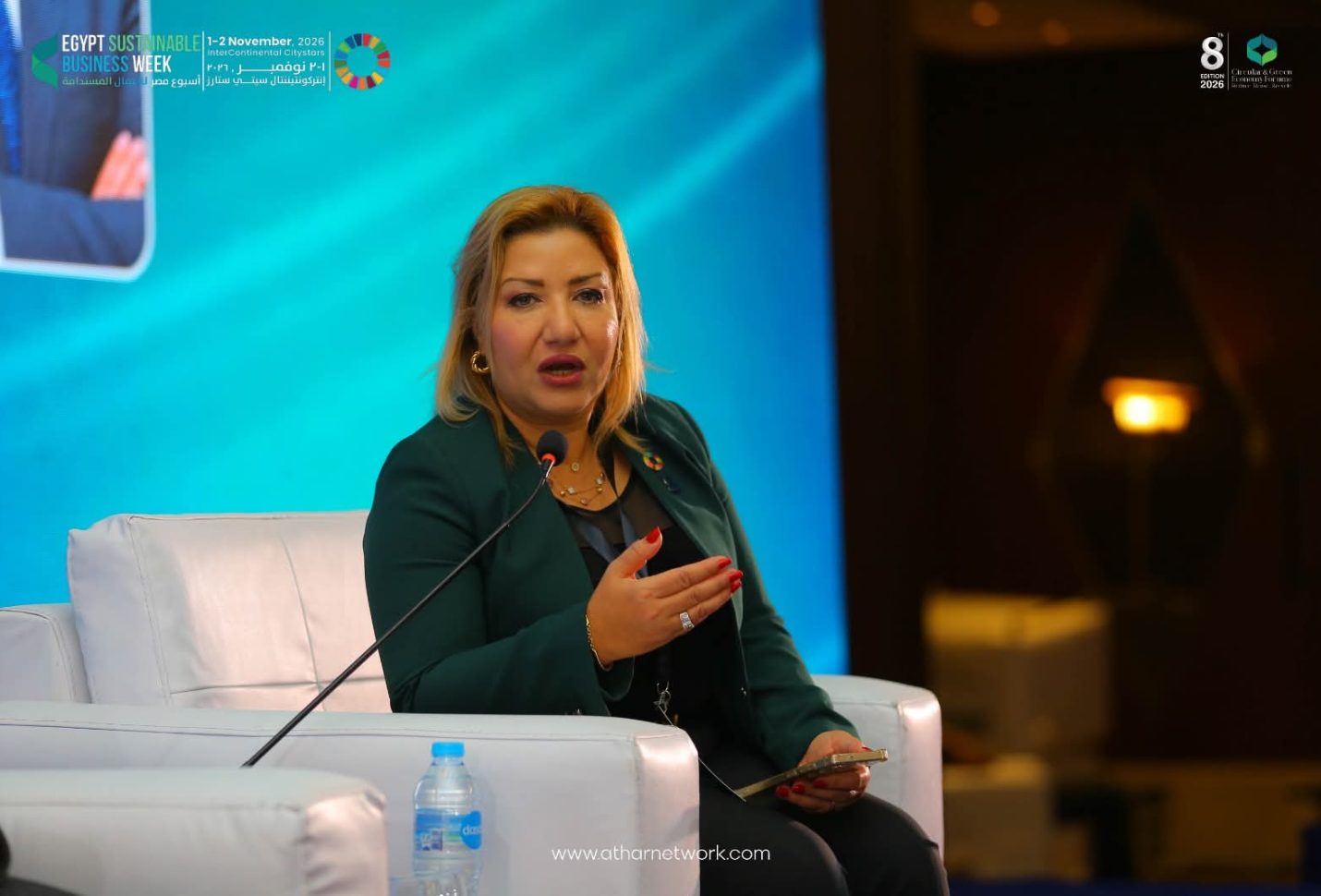
Amany Arafa, Board Member of the United Nations Global Compact Network Egypt (UNGCNE), said companies must place sustainability at the heart of their strategies, starting at board level, warning that failing to adopt environmental, social and governance (ESG) standards could result in losses exceeding the cost of implementation.
She made the remarks during a session titled “From Disclosure to New Markets: How Can ESG and Sustainability Become a Competitive Advantage for Export?” at Egypt Sustainable Business Week 2026.
Arafa stressed that sustainability cannot be delegated solely to a designated employee or department, but requires commitment from senior management and integration into corporate development, growth and expansion plans.
Sustainability beyond CSR:
Arafa distinguished CSR, which typically covers social initiatives such as healthcare, education, family support and donations, from sustainability, which shapes how companies operate, grow and enter new markets.
She said framing sustainability in terms of business performance and economic returns helped secure board-level interest and prompted companies to examine implementation requirements.
On concerns over costs, Arafa said companies should focus not on how much sustainability measures cost, but on the potential losses of failing to adopt them. Compliance can also open up new opportunities for growth and market expansion.
Export markets drive sustainability requirements:
Arafa cited the experience of preparing Environmental Product Declarations (EPDs), saying foreign currency shortages and difficulties importing raw materials and spare parts had driven companies to seek export markets to secure foreign currency and sustain production.
Exporting, however, requires reliable data and accredited certifications documenting environmental performance, emissions reductions and energy efficiency.
She noted that EPDs cover all raw materials used in production, not just the finished product, requiring companies to assess every production stage and verify input sources.
Sustainability also extends across supply chains, with companies required to assess suppliers’ sustainability practices, verified carbon footprint data and emissions-reduction efforts, alongside technical compliance and competitive pricing.
Arafa said sustainability requires coordinated action among multiple stakeholders and practical research to help companies meet evolving requirements and remain competitive.
Amany Arafa, Board Member of the United Nations Global Compact Network Egypt (UNGCNE), said companies ...
Chairman of the General Organization for Export and Import Control (GOEIC) Essam El-Naggar said the ...
Nihal Rizk, Head of Sustainability and Sustainable Finance at Abu Dhabi Islamic Bank (ADIB) Egypt, ...


Leave a comment