
HKEX launches green equity program for listed companies
Hong Kong Exchanges and Clearing Limited (HKEX) has launched a voluntary designation program to help ...
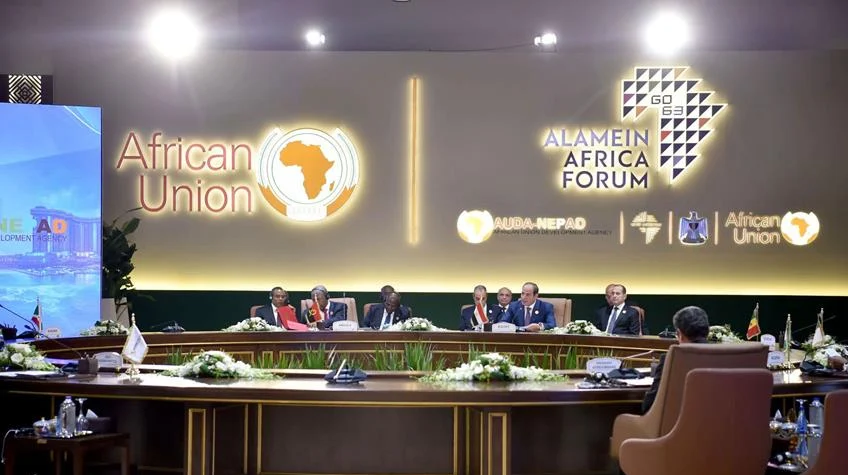
The inaugural Alamein Africa Forum brought African leaders, development institutions and business executives together to discuss how the continent can turn its natural resources, capital, markets and human potential into productive capacity, jobs and sustainable economic growth.
Held in Egypt’s New Alamein, the forum focused on moving from Africa’s development ambitions to implementation, with discussions highlighting African financing, industrialization, infrastructure, regional integration, private-sector investment and stronger African institutions.
The forum underscored the need for Africa to move beyond exporting raw materials and use its agricultural, mineral and energy resources to create greater value within the continent.
Aliko Dangote, President and Chief Executive of Dangote Group, said Africa’s development should be measured not only by GDP growth, but also by what the continent produces, the domestic capabilities it creates, the productive jobs it generates and the resilience of its economies.
He called for greater processing, manufacturing and value addition to transform Africa’s natural endowments into productive capabilities.
Dangote also highlighted energy as critical economic infrastructure for industrial corridors, agricultural processing zones, mining centers, technology clusters and cities.
Egyptian President Abdel Fattah El Sisi called for greater reliance on African resources and the development of African financing mechanisms, stressing that sustainable development must be built through the continent’s people, knowledge, work and creativity.
During Egypt’s chairmanship of the African Union Development Agency (AUDA-NEPAD) Heads of State and Government Orientation Committee, Egypt accorded priority to development financing and efforts to bridge funding gaps, according to Sisi.
He also highlighted the private sector as a key driver of growth and job creation and called for stronger public-private partnerships and more effective development financing mechanisms.
Dr George Elombi, President and Chairman of the Board of Directors of Afreximbank, stressed the importance of strengthening African-owned financial institutions and ensuring they have the capacity to respond to economic shocks and support the continent’s development.
The forum also highlighted regional integration as a means of creating the scale needed for investment, industrialization and sustainable growth.
President Sisi called for stronger connections among African businesses, greater access to information on opportunities in neighboring markets and practical measures to increase intra-African trade.
Burundi’s President Évariste Ndayishimiye, the Chairperson of the African Union, called for a shift from diplomatic partnerships toward economic, investment and production partnerships.
He highlighted the need for trade corridors, integrated border posts, harmonized customs procedures, cross-border payment systems, trade finance, logistics and regional value chains.
Ndayishimiye also proposed an African Investment and Implementation Dashboard to track strategic continental projects, investments, financing, responsibilities, timelines and measurable results.
Dangote said the African Continental Free Trade Area (AfCFTA) should be viewed not merely as a trade agreement, but as continental economic infrastructure capable of creating the scale needed for investment and industrialization.
AUDA-NEPAD CEO Nardos Bekele-Thomas said Africa’s challenge is not a shortage of meetings or plans, but a shortage of deals, implementation and execution.
She called for governments and businesses to remain at the same table and for the forum to become a permanent mechanism for translating political commitments into investment and development outcomes.
Bekele-Thomas highlighted the need for private capital, blended finance and project preparation, alongside greater mobilization of African pension and sovereign wealth funds.
She also called for a shift from national to regional projects, harmonized standards and stronger economic corridors, with the aim of moving projects from preparation toward financial close and implementation.
The forum placed human capital and productive employment alongside investment and infrastructure as key elements of Africa’s development.
President Sisi said building a knowledge-based economy, investing in human capital and empowering youth have become fundamental to sustainable development, stressing the importance of placing the African citizen at the heart of the development process.
He also said governments must provide a conducive investment environment through infrastructure development, effective legislation and regulation, ease of doing business, stability and the rule of law.
These conditions, the discussions highlighted, are essential to enabling the private sector to invest, innovate, create jobs and contribute to long-term economic growth.
African ownership emerged as a common theme across the forum, from financing and financial institutions to investment, industrialization and regional integration.
President Sisi called for stronger African capacity to finance and drive development, while Elombi stressed the importance of African-owned institutions. Dangote called for greater African investment in Africa and urged the continent to work together to develop its economies.
The forum’s discussions ultimately focused on turning Africa’s resources and potential into productive investment, stronger industries, jobs and greater economic resilience.
The Alamein Africa Forum thus placed implementation at the center of Africa’s sustainable growth agenda, linking African resources and capital with regional integration, private-sector investment and development outcomes.
Hong Kong Exchanges and Clearing Limited (HKEX) has launched a voluntary designation program to help ...
Abu Dhabi Future Energy Company (Masdar) increased clean electricity generation from its operating projects by ...
Citi has closed a $72 million, 3.5-year principal-protected Carbon Removal-Linked Note to finance Applied Carbon’s ...


Leave a comment