ADCB Egypt shifts sustainability focus to financing, client support
Merham Yousri, General Manager – Head of Sustainability at Abu Dhabi Commercial Bank – Egypt ...
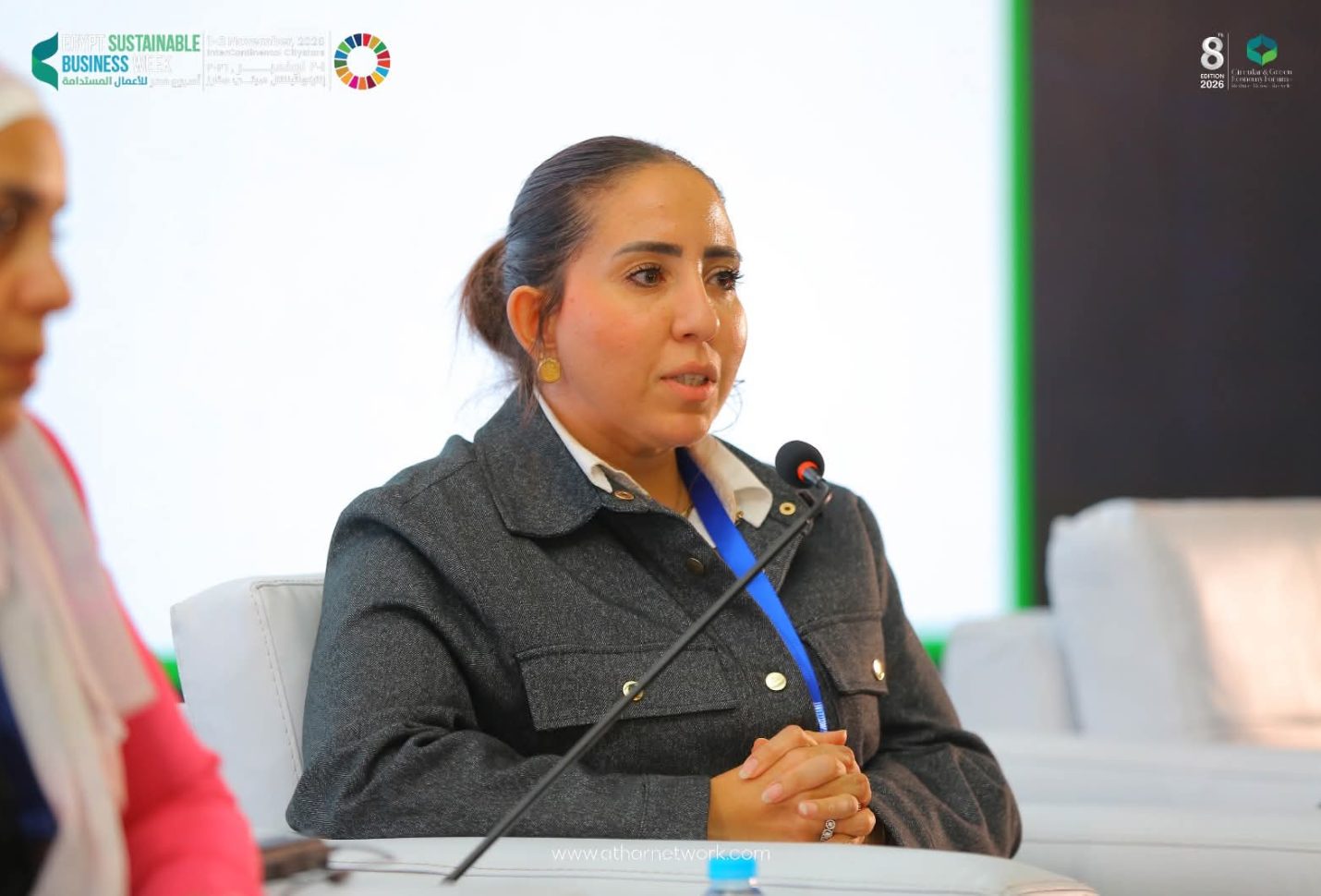
Speaking during the session “From Disclosure to New Markets: How Can ESG and Sustainability Become a Competitive Advantage for Export?” at Egypt Sustainable Business Week 2026, Yousri stressed the importance of translating sustainability targets into practical measures across the bank’s various operations.
She explained that effective sustainability reporting requires clear targets and defined performance indicators across different departments to ensure reported data reflects actual performance and measurable results.
While ADCB has succeeded in reducing its own carbon footprint, the bank is now placing greater emphasis on sustainable finance, which she described as one of the main challenges in supporting clients’ transition.
Partnerships to support clients:
Yousri said the bank is building partnerships with various entities to advance its sustainable finance strategy, noting that banks cannot achieve their sustainability goals independently.
Supporting clients requires providing them with the expertise and tools to measure the environmental impact of their activities and work toward reducing it.
In this regard, ADCB has partnered with the General Organization for Export and Import Control (GOEIC) to help clients measure their carbon footprints. The bank has also introduced a financing product to help clients cover the costs of carbon footprint assessments by making the service available at a lower cost than other options in the market.
The bank is also working with accredited entities to ensure the reliability of carbon footprint measurement reports and enable clients to make use of them in the voluntary carbon market.
Yousri said the bank’s role extends beyond providing financial services to building long-term partnerships that help clients prepare for increasingly demanding environmental requirements.
Preparing exporters for new requirements
Exporting companies are facing growing costs associated with measuring their carbon footprints as sustainability requirements in international markets continue to expand, Yousri said.
She expects digital requirements related to sustainability to increase in the coming period, making it important for banks to act early and help clients secure the tools and data needed to comply.
Rather than waiting for new requirements to be imposed on businesses, banks should work with clients from the early stages of their transition, she added. This approach would strengthen companies’ ability to adapt to regulatory and commercial changes while protecting their competitiveness in international markets.
Merham Yousri, General Manager – Head of Sustainability at Abu Dhabi Commercial Bank – Egypt ...
Steel structures can reduce construction time by 23% and building weight by 55%, offering a ...
Maali Khader, Founder and CEO of Schema, said Egyptian companies’ readiness for sustainable exports increasingly ...

Leave a comment