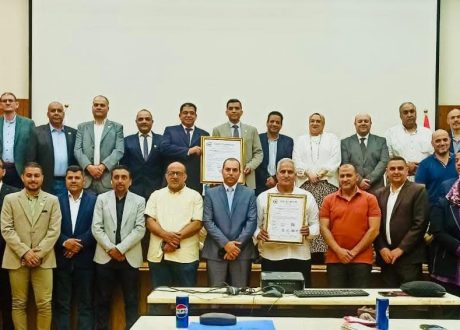
“وزير الزراعة” يعلن حصول الحجر الزراعي المصري على شهادة الأيزو لأول مرة
أعلن علاء فاروق، وزير الزراعة واستصلاح الأراضي، حصول الإدارة المركزية للحجر الزراعي على شهادة الأيزو ...

At present the total mini grid investment in countries with low levels of electricity access in Africa and Asia totals $5 billion.
Across the globe, countries need to actively mobilize private sector investment. This can be achieved by setting up policies that support comprehensive electrification programs, promoting viable business models, and providing public funding, for example through performance-based grants.
Compared with main grid and solar home systems, mini grids are a more viable solution for areas with high population density and medium electricity demand.
Extending main grid to serve remote communities is often prohibitively expensive. Globally, at least 19,000 mini grids are already installed in 134 countries, representing a total investment of $28 billion and providing electricity to around 47 million people. Most are deployed in Asia, while Africa has the largest share of planned mini grids.
“Mini grids are now one of the core solutions for closing the energy access gap. We see great potential for mini grid development at scale and are working with countries to actively mobilize public and private investment,” said Riccardo Puliti, Senior Director of Energy and Extractives at the World Bank.
“The World Bank has been scaling up its support to mini grids while helping countries develop comprehensive electrification programs. Our commitments to mini grids represent about one-quarter of total investment by the public and private sector in our client countries. The Bank’s portfolio spans 37 mini grids projects in 33 countries, with a total commitment of more than $660 million. This investment is expected to leverage an additional $1.1 billion in cofinancing.”
In addition to being cost-efficient, mini grids have many other benefits. They have positive environmental impacts: 210,000 mini grids powered by solar energy would help avoid 1.5 billion tons of CO2 emissions globally. They also offer national utilities a win-win solution in the electricity sector by paving the way for more financially viable future grid expansion.
By the time the main grid arrives, significant demand for electricity would already exist and customers would have greater ability to pay through the generation of productive uses made possible by mini grids.
أعلن علاء فاروق، وزير الزراعة واستصلاح الأراضي، حصول الإدارة المركزية للحجر الزراعي على شهادة الأيزو ...
تابع المهندس شريف الشربيني، وزير الإسكان والمرافق والمجتمعات العمرانية، سير العمل بعددٍ من مشروعات المرافق ...
أكد الدكتور أحمد السبكي، رئيس الهيئة العامة للرعاية الصحية، أن الهيئة تبنت 7 ركائز رئيسية ...
اترك تعليقا