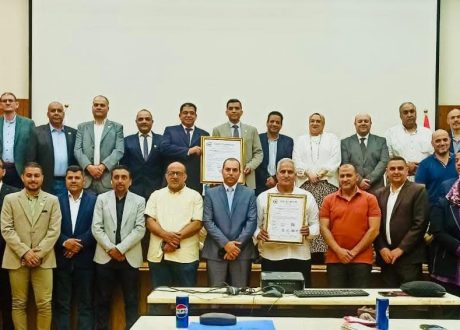
“وزير الزراعة” يعلن حصول الحجر الزراعي المصري على شهادة الأيزو لأول مرة
أعلن علاء فاروق، وزير الزراعة واستصلاح الأراضي، حصول الإدارة المركزية للحجر الزراعي على شهادة الأيزو ...

A recent report – published by the United Nations Environment Program (UNEP) and GRID-Arendal with the Global Wastewater Initiative (GWWI) – said wastewater can become a climate solution, highlighting Egypt among successful examples of wastewater management.
The report cited other examples of successful wastewater management from both high- and low-income countries, including in the Caribbean, China, Colombia, Denmark, Germany, India, Israel, Namibia, Senegal, Sweden, Singapore, the Solomon Islands and Tunisia.
The report – entitled “Wastewater. Turning problem to solution” – called on governments and businesses to treat wastewater within the framework of circular economy as wastewater could provide alternative energy to half a billion people.
Wastewater treatment can supply over 10 times the water provided by current global desalination capacity and offset over 10 percent of global fertilizer use, according to the report entitled “Wastewater. Turning problem to solution”.
There are multiple benefits for effectively collecting, treating, and reusing wastewater – including new jobs and revenue streams. Additional advantages would result from reducing the volume of wastewater produced.
Today, only 11 percent of the world’s treated wastewater is reused and around half of the world’s untreated wastewater still enters rivers, lakes, and seas.
To safely fulfill the potential of wastewater as a valuable resource, the report called to reduce the volume of wastewater being produced, prevent and reduce contamination, and manage wastewater to capture the resources that can be safely reused.
“Globally, wastewater is full of potential, yet it is currently allowed instead to contaminate the ecosystems we rely on,” said Leticia Carvalho, Principal Coordinator of the Marine and Freshwater Branch of UNEP. “We must not let the opportunity simply disappear down the drain: it’s time to realize the promise of wastewater as an alternative source of clean water, energy, and important nutrients.”
Wastewater accounts for about 1.57 percent of global emissions, just below the climate harm caused by the global aviation industry. Yet wastewater can become a climate solution: in generating biogas, heat and electricity, it can produce about five times more energy than is required for its treatment – enough to provide electricity for around half a billion people per year. By reducing water insecurity, good management of wastewater can also support countries’ efforts to adapt to climate change.
Reusing nitrogen, phosphorous and potassium from wastewater would also help reduce dependence on synthetic fertilizers, offsetting 13.4 percent of the global agricultural nutrient demand.
Proper management of wastewater also has the potential to irrigate around 40 million hectares – an area equal to almost the size of Paraguay.
There are additional resources that can be recovered from wastewater, which are already benefiting various industries, including raw material for producing paper, polymers, pesticides, rubber, paint, biodiesel, food preservatives and flavors, fireproofing and waterproofing fabrics, medical products, jewelry, and packaging of food, hygiene, and other products.
أعلن علاء فاروق، وزير الزراعة واستصلاح الأراضي، حصول الإدارة المركزية للحجر الزراعي على شهادة الأيزو ...
تابع المهندس شريف الشربيني، وزير الإسكان والمرافق والمجتمعات العمرانية، سير العمل بعددٍ من مشروعات المرافق ...
أكد الدكتور أحمد السبكي، رئيس الهيئة العامة للرعاية الصحية، أن الهيئة تبنت 7 ركائز رئيسية ...
اترك تعليقا